In a few months, it will be 100 years since the founding of one of Romania’s most productive textile enterprises—the 1 IUNIE knitwear factory in Timișoara—and nearly 10 years since its bankruptcy. Currently in the process of demolition to make way for a residential complex, the iconic building in the Fabric neighborhood still holds symbolic and emotional power, drawing former employees back home who emigrated to Western countries immediately after local production of children’s clothing could no longer meet the competitive market demands specific to the capitalist system.
It is one of the countless cases of faulty post-1989 privatizations of state enterprises, the so-called flagships of Romanian industry during the socialist era, which followed a similar trajectory: from impressive production capacity serving Central and Western Europe, Russia, Canada, and even the Middle East, to illegal sales, legal proceedings spanning years, lack of investments, unprofessional management, and ultimately, bankruptcy and demolition. Timișoara’s textile history was similarly written in the case of the Hosiery Factory, the Paltim Hat Factory, the Leather and Upholstery Factory Dermatina, the Garofița Textile Factory, and the Industria Lânii SA complex.
Before the 1989 revolution, Romania’s textile industry gathered under the Ministry of Light Industry (established in 1945, according to national archive documents) around 200 high-performing factories that continuously produced stockings, lingerie, knitwear, hats, cotton, wool fabrics, linen, hemp, etc., placing our country among the top international exporters of premium clothing catering to all categories of purchasing audiences. Calculating based on the number of employees, especially female employees (800,000 by the end of the ’80s), working conditions (in three shifts, including Saturdays and Sundays), invention patents, and a production capacity reaching 1 million pieces per month in a single enterprise—Romania could easily have been considered the best and most well-dressed European country.
Clothes Make the Man and Pride the Maker
“It was also delivered domestically, but very little. Everything went to France, most to Germany, then to France and the United Arab Emirates.” (former worker, Timișoara Textile Factories)
Depending on the region and local investments in production equipment, between 60% and 80% of the volume achieved by the textile industry during the communist period went to export. For instance, the 1 IUNIE children’s knitwear factory in Timișoara reached its peak between 1975 and 1985 after a period of expansion and modernization in the early ’70s, during which it increased production capacity by 80% and reached a record number of 4,800 employees, over 90% of whom were women, often at the beginning of their professional careers.
“I worked at 1 IUNIE when I was a girl. I think I was 16, maybe 15… I worked in sewing, and well, I already knew how to sew because I had a machine at home, but it was one with pedals… and when I got here, I loved it, and I saw how well those machines ran, I caught on immediately, and all the supervisors liked me. Then, after a day or two, they put me on exports. Boys’ and men’s underwear, things like that, a lot for export… well…” (former worker, 1 IUNIE)
The example is not singular; all textile factories in Banat, even those still active, like the Timișoara Textile Factories, delivered finished products to international markets overwhelmingly and with quality standards far above national ones. Although they used local raw materials, access to exported textiles and knitwear was limited and more possible through informal purchasing methods specific to the era (under-the-table procurement), used by factory employees and their acquaintances or friends.
“What was good and high quality rarely reached Romanians, so if you had a contact in the factory, as it was everywhere at that time, and maybe even now, I don’t know, you would be sent a piece of that fabric, you’d go there, say your name was Simionescu, and they’d give it, and then the money… that’s how it worked, but some of it surely went to those fashion houses where they had tailors, you know, but less.” (former engineer and department head, Industria Lânii SA)
Compared to the current period of decline in Romania’s textile industry (due to exploitation, lack of liquidity, the volatility of international markets, and difficult-to-meet European Union regulations), and the exaggerated consumption of imported clothing (fast fashion and ultra-fast fashion phenomena), being involved in the production process of Romanian-made clothes, considered to be of the highest quality and globally appreciated for materials, designs, execution, and stitching, was in itself a form of local pride and professional fulfillment.
“Yes, the wool was only from Romania. And we sent the goods for export. I got a suit and pants for my husband. The fabrics were very good; that’s why we worked mostly for export… the showrooms were always stocked… well, but mainly we worked for export, like most factories. I have a very nice winter suit made of that fabric; I got it from the factory’s creation department… it was a more restricted production, not for the big sales, but we, the workers, had access.” (former weaver-spinner, Industria Lânii SA)
Seemingly drawn from the propaganda arsenal of the time, the profound sense of belonging to a shared past among former Timișoara textile workers in the socialist factories is fueled, on the one hand, by the exclusive nature of their work (for export) and, on the other, by the experience, training, and guidance obtained over time in the enterprises where they worked.
“It was something extraordinary for us. We were proud, proud… they were little dresses… now, when I enter a store after the revolution and go to a mall, I go just for fun to see… but I don’t feel the same pleasure, it doesn’t satisfy me. What we worked on compared to the rubbish now, I mean in terms of quality… it’s incomparable. I’m sorry I don’t have anything to show you, to see the quality that was made and the quality that’s out there now.” (former workshop head, Bega Confecții Factory)
Nostalgia for the Process and Well-Done Norms
“If you didn’t meet the quota, you weren’t in the five-year plan. A five-year plan is five years of production at the highest standard… to be in first, second, third, fourth place… to be on the honor board. We exceeded the quota. And we had fairly high salaries. If I had a salary or pension like I had then, I’d be a lady now.” (former worker, Cotton Factory)
Regardless of the positions held in production sections, the machines they worked on, the shifts, or the commutes they often made from Timiș County localities, memories of professionalization and continuous improvement in the industrial environment of the era dominate discussions and recollections about the motivations for staying in the same job for decades, the work processes, qualifications, and recognition they received.
The value placed on work, closeness with bosses and superiors, and participation in a creation
process, visible and understood by each worker, constituted the main reason why those who dedicated their lives to production showed up to work every morning at 6:00 am. Taken in immediately after finishing general schools/ high schools/ vocational schools, around the age of 16-18, the staff underwent practical and training internships, and based on abilities and work progress, they were assigned to specific production lines, sections, and machines.
“The first time, I joined the cutting section, meeting the quotas and the salary of those working there, because once it came out of the machine that cut it, other women made the packages, put the pants and hat and everything you needed for a set. Then the chief accountant said it was a shame for me to stay there and assigned me to the unfinished goods warehouse, that is, the uncut bales. And there I had to train the people who carried the goods for cutting and finishing, to the dyeing department… two drivers… I did their salaries, handled entries/ exits from knitwear to me, from me to dyeing, back to me, then to the sections… and so on.” (former accountant, 1 IUNIE)
Work experiences and the general atmosphere in former socialist enterprises are described in detail, even after half a century of activity, by workers well past retirement age. Relationships with colleagues, superiors, and even the machines they appropriated and invested with emotional significance—“They worked in Germany and returned to see if the factory was still there and kissed the machine they worked on” (former administrator, 1 IUNIE)—compose the social reality of a type of work where “you left tired, but not stressed” (former workshop head, 1 IUNIE).
“I worked on several key stages. The first was on the triploc, as it’s called more industrially, meaning the three-thread machine that ran with three bobbins and three threads. How did that machine work? It stitched and at the same time cut the rest of the material, the excess that was on that piece in the machine. After three threads, they moved me to other stages, to the linear machine, for example, to the tack machine, which was like how our parents sewed by hand, or to the Rimoldi. The Rimoldi was a machine used to make the lengths of the t-shirt with an elastic seam because each type of seam had its importance.
At one point, it was quite hard, and I even got annoyed because I thought, how on earth can I be like a ping-pong ball, being moved from one stage to another… being a child, I didn’t understand that this would be very useful to me later. And that’s exactly what happened.” (former worker, 1 IUNIE)
Contrary to the dominant perception and anti-communist discourse that took over the public space after 1989, both in Timișoara’s textile factories and in many industrialized areas of socialist Romania, the relationship between local management (factory directors) and the central authority in Bucharest was not one of top-down subordination but rather of continuous negotiation of work plans and quotas, where roles were often reversed: local production and performance influenced major decisions made at the central level.
Similarly, the portrayal of workers in former industrial complexes as unmotivated, unsatisfied, and alienated, as part of an uncompetitive system that didn’t encourage professional growth, is systematically contradicted by the testimonies of those who spent much of their lives around machines and production lines doing physically hard and repetitive work. For these workers, the experience was fulfilling and generated emotionally significant memories of community.
Community, Organizational Culture, and Enviable Benefits
“It was a harmonious life, with big-hearted people, where we could understand each other, collaborate, ask each other for opinions to help us progress, and in our free time, we’d take trips to Herculane, Orșova, Moneasa, and Muntele Mic.” (former worker, Cotton Factory)
Besides domestic trips organized by the unions most employees were affiliated with, there were also private events such as birthdays, festive meals, and performances around legal holidays, as well as artistic and satirical brigades, water polo and volleyball teams, sports competitions, access to swimming pools, union-sponsored bonuses and gifts, tickets and vacations on the coast for outstanding work, leave and facilities for mothers—these were all integral parts of the enterprise culture of the time.
Being a predominantly female workforce and working at a fast pace (in 2-3 shifts), the industrial complexes were equipped with their own daycare centers, kindergartens, and cafeterias, and organized events dedicated to children. One of the most vivid memories invoked by the female workers involves a sense of tolerance, empathy, and understanding from colleagues and management regarding family situations inherent to parental life. Beyond this permissiveness manifested within the collective, employees were provided with specialized medical services, such as a gynecologist at the factory’s dispensary, alongside a general practitioner.
“For example, I had children, and they understood. They’d let me take my leave whenever I could, and with the kids… I had a lot of freedom to be with my children, and my supervisor understood a lot whenever I went to her and explained.” (former worker, 1 IUNIE)
Regarding housing and financial security, the housing policy applied by the socialist state is well-known, specifically the role it took in ensuring housing for the workforce relocated from rural areas before the 1970 reform (when cooperatives were introduced). Textile factories in Timișoara were no exception, with employees having the option of benefitting from studio apartments or dormitory rooms (which still exist today).
Ensuring at least satisfactory and stable salaries for all categories of staff—“The salaries were good… very good. With just one salary, I took my family on a two-week vacation, I even got an apartment by the sea” (former workshop head, 1 IUNIE)—alongside paid overtime, leave upon request, paid internships, and training courses with diplomas, international exchanges, and invention and innovation competitions within departments, the collective memory speaks not only of belonging to a community and interpersonal relationships but also of the social reality of a system as oppressive as it was hard to match in the experiences of young adults at the time.
“If you open it now, we’ll come back.”
This strong, both idealistic and ironic statement from former employees at the 1 IUNIE knitwear factory, who went abroad after its privatization and returned to Timișoara for a holiday, can easily serve as a conclusion as it embodies two major themes that still concern Romanian society today: the nostalgia of those who lived much of their lives in the “golden age,” with all its challenges, social relationships, satisfactions, and emotions, and on the other hand, the massive exodus of the Romanian workforce to Western Europe, lost in the post-1989 transition.
“Well, I had friends, how should I put it, friends from all walks of life with whom I still keep in touch. Yesterday was St. Mary on August 15, and I made many calls, and for Sts. Constantine and Helen, I received 50-60 calls. I only have beautiful memories from what I saw and knew about the factory… it was the only one… it had a past, a present, and a future.” (former craftsman, Cotton Factory)
“And even now, I keep in touch, although I’m retired. Yes, because we helped each other in the production process. It was nice. It was hard, but it was nice too.” (former engineer, Industria Lânii SA)
Those who remained at home after the collapse of Timișoara’s socialist textile industry and either retrained or retired speak of maintaining social relationships over time, about the bonds they built and nurtured in an oppressive political regime that, inside, through the people who lived through it, encouraged cooperation, mutual aid, and resilience. As always—in the background of eras, buildings, and constructed spaces—are the people who keep the memory of places and times alive.
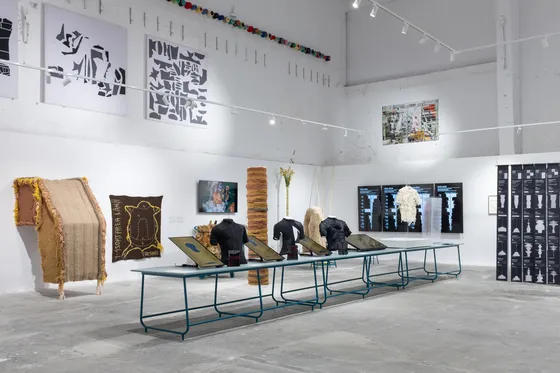
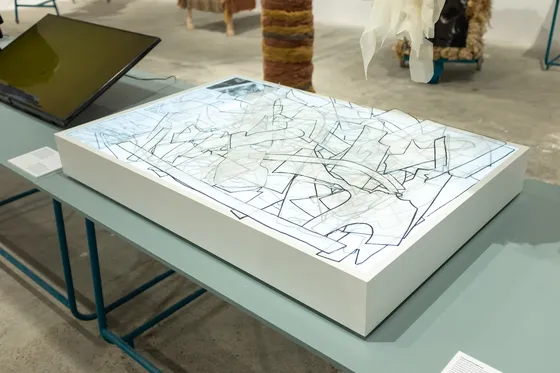
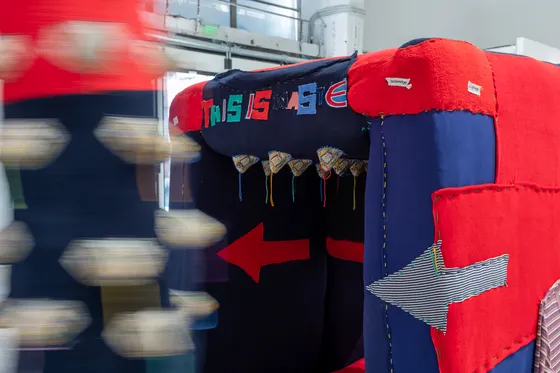
This material was created based on over 20 interviews (filmed and transcribed) with former employees in the local textile industry and is part of the curatorial program “Woven Secrets” developed by the FABER space in Timișoara. The initiative views our country’s textile industry as a complex, interconnected sector that reflects the broader economic trends in Romania, Europe, and global production systems. The exhibition with the same name emphasizes the power of design to change conventional production models and presents bold, visionary approaches to making, producing, and collaborating. It can be visited until November 24 at FABER Timișoara.