In Back to Our Sheep, designer Lavinia Ghimbășan, co-founder of Nalba Studio, looks at ways of reviving Romania’s declining wool industry. Through deep engagement with local communities, traditional practices, and industry actors across Transylvania and Banat, Ghimbășan explores wool as a rich, multi-functional resource. By blending craft heritage with contemporary design, the project reimagines wool’s potential for sustainable production, and reflects on the cultural importance of this increasingly forgotten material. Here Ghimbășan discusses the role of wool in Romanian culture, the challenges of reviving old knowledge, and the future of regenerative design in her work.
Back to Our Sheep uses design not to come up with new products made of wool, but to explore the industrial, cultural and ecological networks that surround wool in Romania. How did come to develop this approach to design?
Lavinia Ghimbășan: My background is actually in space and light design, which I studied in Denmark, where I lived and worked for about ten years. Throughout my career, I’ve always been drawn to different artistic practices, especially those related to upcycling and using local resources. About two and a half years ago, I felt a strong urge to return to Transylvania, and that’s when I co-founded Nalba Studio with my friend Capucine Robert from France. Our project about wool was the main reason I came back. Wool, which was once so valuable, has sadly become a waste product in Romania and across Europe. I wanted to explore how we, as designers, can work differently and take a more holistic approach—one that respects the material, the land, and the traditional knowledge that still exists.
Through taking this holistic approach, what have you learnt about wool?
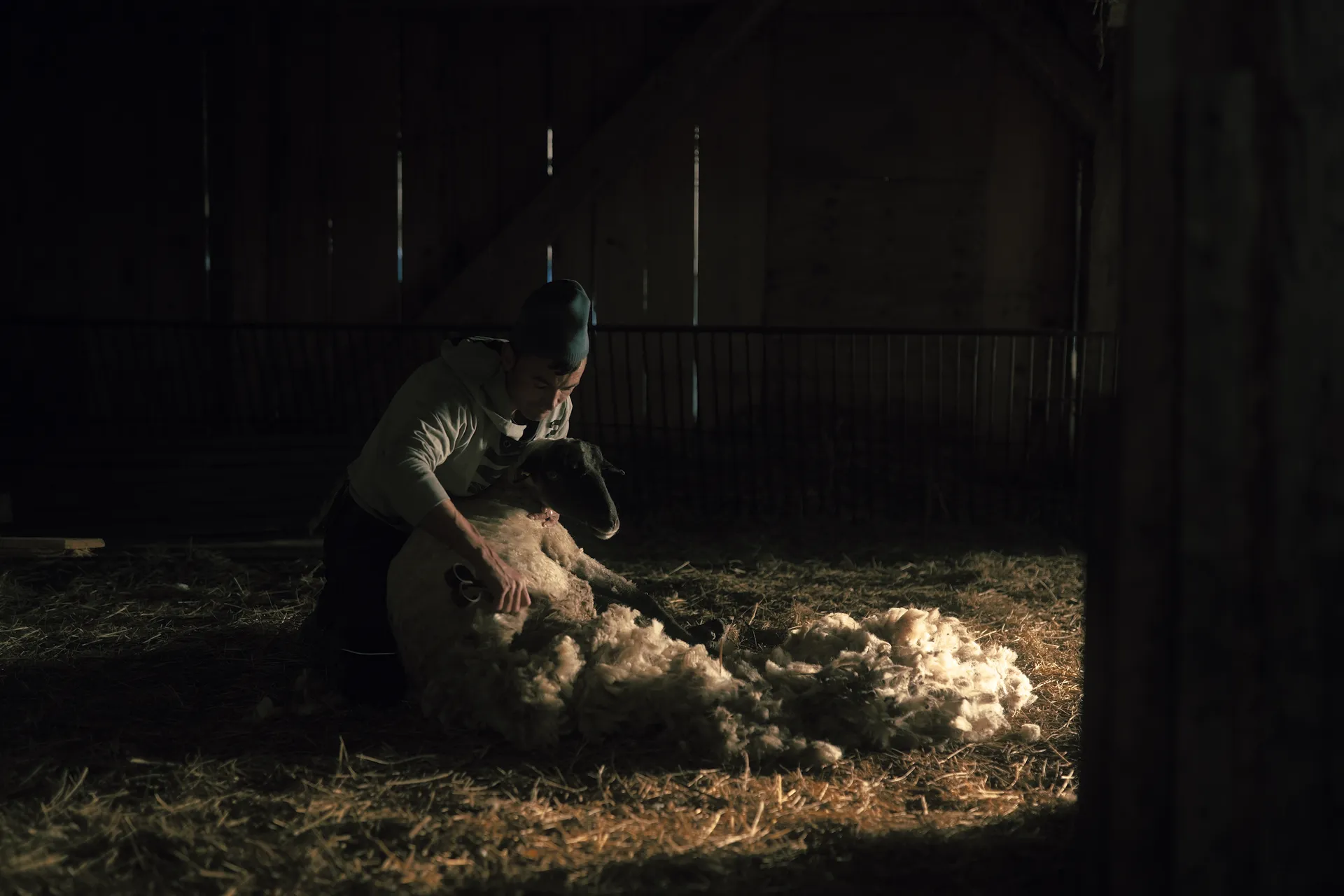
LG: Wool is a material that can’t be reduced to just one thing. It has thermal, acoustic, and even agricultural properties. For example, we’ve explored wool’s potential as insulation material. We’ve also used wool for more traditional applications, like creating threads for weaving, and documented the entire process—from shearing to spinning—through video and photography. One of the most eye-opening aspects of this project was realising that wool, when processed correctly, is an incredibly versatile and sustainable material. But the sad reality is that a lot of wool is simply discarded or buried because there isn’t a proper system in place for re-using it. That’s why I’ve started to think of these as ‘wool cemeteries’ where the material is wasted.
How do you see the role of designer evolving, particularly in this project?
LG: I think the role of the designer is shifting from just making objects to something more relational. Nalba Studio has come to describe ourselves as mediators—connecting different practices, people, and spaces. In Back to Our Sheep, we aren’t just focused on producing wool-based products. We’ve gone into the field, almost like anthropologists, engaging with farmers, artisans, and manufacturers. It’s about understanding the whole system and the relationships within it. We see our work as part of a larger conversation about sustainable design and craft.
How did you approach creating these collaborations that connect different actors in the wool industry across Transylvania and beyond?
LG: A lot of it came down to simply being curious and open. We visited farms, small family-run businesses, and industrial producers, meeting people who still work with wool in different ways. Some of them were aware of each other, but others weren’t, so our role became about reconnecting them and re-establishing a chain that had been broken. For instance, we learned that some farmers use wool as a natural fertiliser, which is such a beautiful, resourceful solution. Sharing that knowledge could benefit other farmers who struggle with wool waste. It’s been inspiring to see these pockets of hope amid the challenges.
The project takes a bioregional approach. What does bioregionalism mean to you?
LG: Bioregionalism is about designing within the context of a specific region, using its resources—both the material and the intangible. For Nalba Studio, that means looking at the traditional knowledge of wool farming, dyeing, spinning, and weaving in Transylvania, and bringing it into a contemporary context. For instance, we’ve explored natural dyeing with plants from our garden, a practice that used to be common but has been largely replaced by chemical dyes. By reviving these traditions, we’re trying to bridge the past and the present and think about how we can create something meaningful for the future.
You’ve worked with wool in both Romania and France. How does this local-global exchange inform your approach to bioregionalism?
LG: It’s been such a rich exchange of knowledge. For example, in France, they have a long tradition of wool processing and natural dyeing, and we’ve been able to learn a lot from that. At the same time, I’m deeply committed to preserving the local knowledge of Transylvania. It’s important to protect what’s local, but we’re lucky to live in a time where we can also learn from other cultures and apply that knowledge in ways that benefit our own communities.
The exhibition includes several pieces that together show the journey of wool from raw material to finished product. What are some of the specific objects you’ve created?
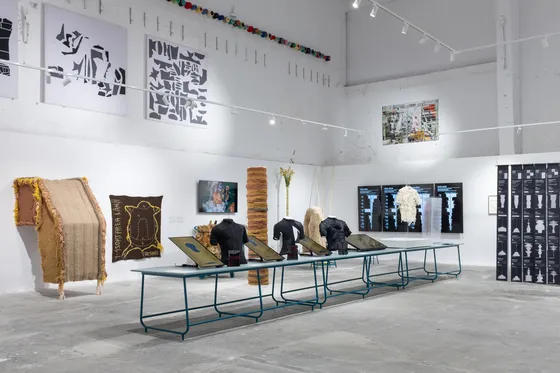
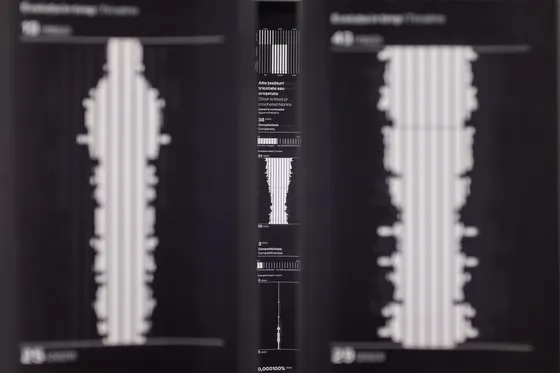
LG: One of the key pieces is a container of raw wool, displayed in its unprocessed state, along with thistles—plants that get tangled in the wool and can damage machinery. The smell of raw wool is very potent, even disturbing. I wanted to show the reality of working with wool, even if it’s not always pleasant. The exhibition also includes felted wool pieces, a traditional technique we’ve explored, as well as a drawing that represents the wool sorting process. Sorting is an incredibly important step that I didn’t even know existed before this project. If wool isn’t sorted properly, it’s seen as waste. But if it’s done right, it can be processed and used effectively.
There is also a shepherd’s coat in the exhibition that ties the project to your family history. What is your personal connection to the project?
LG: Yes, my grandfather was a shepherd, and growing up, I was surrounded by wool, though I didn’t think much of it at the time. It was just a part of life. Revisiting this material now, as a designer, feels like coming full circle. My grandfather’s way of life—his slow, careful approach to nature and materials—has influenced me deeply. For the exhibition, I’m displaying one of his shepherd’s coats, which he hand-sewed, as a way of honouring that connection. Romania has a long pastoral history, and it’s meaningful for me to reconnect with that heritage, while also looking forward and asking how we can preserve it in a modern context.
It would seem that you are taking up the mantel of contemporary shepherd, a design shepherd for the wool industry. What do you envision for the future of Back to Our Sheep?
LG: I definitely have big dreams for the project. One day, I imagine having a wool festival or even setting up a wool washing facility in Romania, which is something desperately needed. I see the project growing as more people get involved, and more knowledge is shared. It’s important to build something that’s not only about preserving traditions but also about creating jobs and sustainable systems for the future. I don’t see this as a solo endeavour. It’s something that has to be done collectively.
Why is it so important to preserve the knowledge and heritage surrounding wool in Romania?
LG: It’s about resourcefulness and being connected to the land. In the past, people transformed what was around them into useful objects, and there’s something deeply sustainable about that approach. Each culture developed its own way of using local materials, and I think there’s immense value in preserving those practices—not just for the sake of tradition, but because they offer solutions to the environmental challenges we face today. It’s about finding a balance between heritage and innovation.