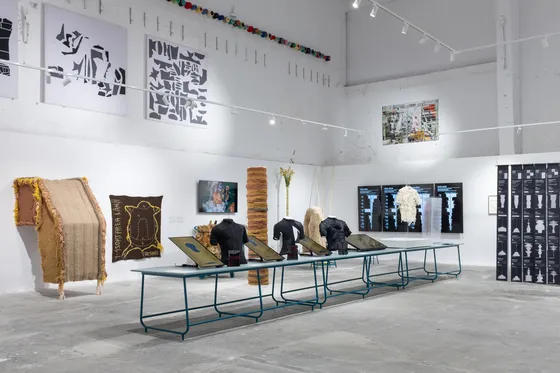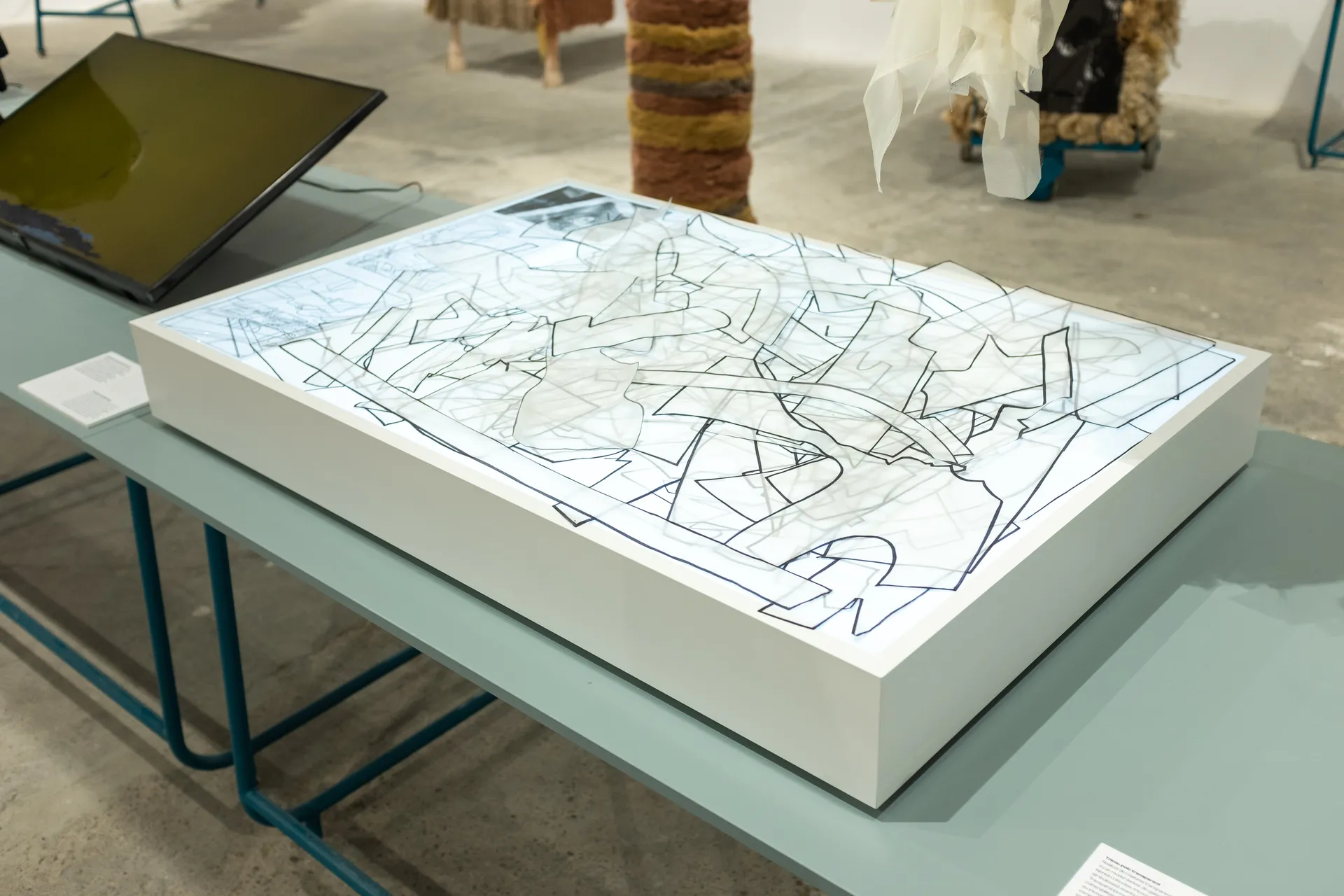
Unsolved Patterns starts from the premise that sewing 100 T-shirts results in 100 identical scraps of material, often considered textile waste. By designing a pattern that fits within these scraps, new standard garments can be created from leftover materials, offering a creative solution to waste.
In this conversation, fashion designers and academics Andreea Ana-Maria Pleșa and Anamaria Mihaela Vișovan discuss their approach to merging digital and analogue methods, and collaborating with major textile producer Cottontex and computer scientist Cătălin Botean. They reflect on how their work aims to challenge traditional production processes, rethink waste in the fashion industry, and build bridges between industry and academia.
You both have a strong academic background. How has this lead you to explore the possibilities of textile waste in Unsolved Patterns?
Andreea Ana-Maria Pleșa: Both of us hold bachelor’s and master’s degrees in fashion and textile design. I completed my PhD last year with a thesis on sustainable fashion design in consumer society, while Anamaria is currently completing her PhD, focusing on the emotional and experiential dimensions of fashion. While we share many academic interests, we approach them differently, which has helped us collaborate effectively on Unsolved Patterns. The topic of textile waste, particularly how to address it creatively and effectively, was new for both of us, making this project both a challenge and a joy to work on. We combined our strengths—my technical expertise in sustainable fashion and Anamaria’s sensitivity to the human side of design. For me, Unsolved Patterns perfectly blends the academic and practical aspects of our work, merging design, sustainability, and innovation.
How do you see the relationship between academia, industry, and design, especially in a commercial field like fashion?
AAP: These three areas—academia, industry, and design—are deeply interconnected. Academia focuses on research, industry reflects contemporary realities, and design adds creativity to solve practical problems. In fashion, these strands cannot work independently. For example, design needs to connect to real-world issues, like sustainability and production challenges, while industry requires innovative solutions that can only come from research. The academic environment’s role is to train specialists who can navigate these complex systems and integrate new approaches into the fashion industry.
You worked closely with Cottontex for this project. What drew you to this factory, and how did the collaboration take shape?
AAP: I had worked briefly as a production engineer at Cottontex during my master’s studies, and I was fascinated by how different their processes were from what I’d learned in university. When we proposed conducting a case study there, they were very open and supportive, providing us with textile materials and patterns. Cottontex could only recycle 100% polyester fabrics, while blended materials like polyester and elastane were deemed waste. This challenge motivated us to explore innovative ways to reuse those materials and find solutions for the industry.
You developed three cycling jerseys, each using different methods to reduce waste. Could you explain the process behind this?
AAP: We started by using standardised scraps to create new fabrics, which allowed us to cut Cottontex’s standard cycling jersey pattern and reduce waste by 50%. From there, we experimented with modifying the pattern to fit the available fabric scraps, ultimately reducing waste by 70%. Lastly, we used a more experimental approach—the ‘accidental cut’ technique—which reduced waste by 90%. This method was more sculptural and abstract, but it showed that with creativity, we could push waste reduction even further. However, these techniques aren’t yet viable for large-scale production, mainly due to the manual labour involved.
What is the ‘accidental cut’ technique? What is its potential in mainstream fashion production?
Anamaria Mihaela Vișovan: The ‘accidental cut’ was developed by Eva Iszoro and is an experimental cutting technique where random shapes are cut out and then sewn together. It’s about seeking rather than finding. We used it to minimise waste by repurposing fabric scraps. However, scaling this technique for mainstream production would be difficult because the results are unique and suited for a specific, more artistic audience. It’s not practical for something like sportswear. Technically, it’s possible to produce, but finding the right market for such abstract shapes is the challenge.
How did using digital pattern-making techniques help reduce waste, and how do you see digital tools shaping the future of fashion design?
AAP: Digital tools are essential in today’s fashion industry. Traditionally, physical prototypes are sent back and forth between factories and designers, generating CO2 emissions from transportation. Digital programs allow for realistic simulations and quick adjustments, reducing both pollution and production time. For this project, we used digital techniques to develop standardised patterns from textile scraps, reducing waste by 70%. I believe this digital approach is key to minimising waste in the future and making fashion production more sustainable.
A transparent polo shirt was also developed for the exhibition. Traditionally the polo shirt is associated with tennis players and the privileged classes. What was your intention with this design?
AMV: The transparent polo shirt is a metaphor for the workers and the environment in which the garments are produced. We wanted to look beyond the materials and patterns, and focus on the people behind the production. By using 100 pattern pieces derived from factory images, we created a garment that reflects the social contrasts and challenges faced by workers. While the cycling jerseys addressed sustainability and waste reduction, this piece explored the human side of the fashion industry, focusing on labour and the invisible stories behind the clothes we wear.
In collaboration with Cătălin Botean, video mapping was also used to capture the repetitive sewing movements of factory workers. Could you explain how this methodology works?
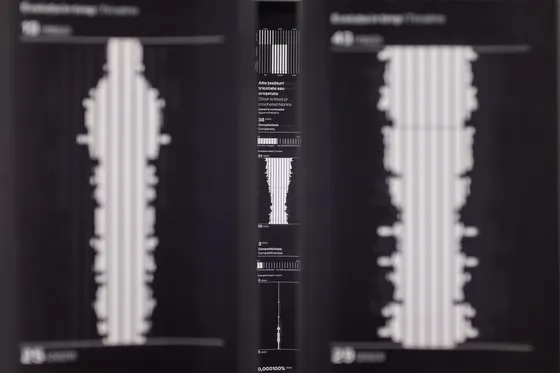
AMV: Cătălin developed an AI program to recognise the movements specific to sewing a basic t-shirt at Cottontex. The AI generated frames of these movements, and I used them to create a pattern representing the labour involved in producing a simple garment. The motivation behind this was to highlight the immense amount of work that goes into making clothes, especially in the fast fashion world, where garments are often undervalued by consumers.
What about the project surprised you the most, and do you have plans to take the project further?
AAP: What surprised me most was how much potential there is to reduce waste if we’re willing to challenge traditional production methods. Initially, we only planned for two waste-reduction methods, but as we progressed, we found ways to push those boundaries even further. I see this project as a stepping stone. My goal is to turn Unsolved Patterns into Solved Patterns by refining the methods we’ve developed. I want to explore more ways to rethink patterns based on textile waste, as I believe this approach could become a viable design method with further development.
AMV: For me, this project opened up new possibilities for research in fashion design. It has set the foundation for future exploration in my PhD thesis, where I plan to continue developing design methodologies that explore concepts and contexts in innovative ways. Although I was aware of the problems and possible solutions, this project opened my eyes to new research possibilities and showed that these experimental approaches have real potential to become standard practices.
If you could make one change in the fashion industry today to address waste and labour issues, what would it be?
AAP: I believe the core issue is overproduction. If we produced fewer garments of higher quality, using ethically sourced and natural materials, we could create a more sustainable industry. This would reduce textile waste, encourage more thoughtful consumption, and ensure better working conditions for factory workers. It’s about prioritising quality over quantity.
How do you see Unsolved Patterns influencing larger fashion companies?
AAP: I believe Unsolved Patterns offers a new way of thinking about fashion production. It demonstrates that there are opportunities to innovate with waste, but it also reflects the reality that consumers tend to choose affordability over ethics. The project aims to draw attention to the people, places, and processes behind garment production. By showcasing alternatives to traditional production and consumption models, we hope to inspire companies and consumers to make more conscious choices.