Nicolae Burtan is an engineer whose life maps onto the industrial history of Romanian ceramics. From his graduation during a period of foreign investment and technological influx, through his central role in building major porcelain factories in Alba Iulia and Curtea de Argeș during the communist era, to his later career as a university professor and private consultant after the 1989 revolution, Burtan has been a first-hand witness to the growth, stagnation, and eventual collapse of an entire industrial sector. In this wide-ranging conversation, he offers a detailed, region-by-region autopsy of the Romanian ceramics industry, identifying the causes of its decline—from misguided policies and lost strategic assets to a critical failure in education—while pointing to the rare, inspiring examples of resilience that offer a fragile hope for the future.
Chemical Bonds: Mr. Burtan, your career spans the entire modern history of the Romanian ceramics industry. Could you tell us about your start and what shaped your path as an engineer?
Nicolae Burtan: Our generation became engineers at a time of foreign investment from prestigious companies, which helped not just ceramics, but all chemical industries. I was from Turnu Măgurele, where a fertiliser plant was being built, and I thought I might work there. But in the dorm, older students told me, "Go to Silicates—it's a new industry, still being researched—it has great potential." So, my friend and I went, and it was a great decision. It was an excellent school; we studied everything thoroughly, with good internships and solid courses. I was also lucky to learn German, which I used throughout my life working with foreign companies.
CB: You were involved in major industrial projects from the very beginning, even creating an invention early in your career.
NB: In communist Romania, graduates were assigned to cities and workplaces by the state. I was assigned to UCM Reșița, to the research laboratory. In my first seven months, I worked on a project that resulted in an invention: a fluid ceramic mixture for foundry work used to cast the propellers for the Iron Gates, which is a gorge on the Danube River, between Romania and Serbia, with a dam and a hydroelectric power station. The project was patented. But when I went to the foundry to apply it, I realised industry wasn't for me—it would be a pity to forget what I had learned without mastering the practical side. I spoke to my professors, and they said, "Burtan, go to Alba Iulia. They're building a new porcelain factory there with German companies. You and your wife both know German. Go and make something of it." And so we went.
CB: This began a period where you rose quickly, becoming a director and building factories across the country. What was the secret to this progress?
NB: I was incredibly fortunate to have remarkable people around me—people I could learn from in every direction: above me, beside me, and below me. I learned from everyone. That was my great fortune. When we met years later, my colleagues would say, "Man, you were really lucky." And yes, by chance, I was the one who got promoted. But it was through work. I started in Alba Iulia, and in December 1971, on my birthday, I was appointed chief engineer for production. Soon after, I was sent to Curtea de Argeș as director to build another factory. I received a waiver from Ceaușescu himself for the position, as I didn't have the required ten years of experience.
CB: After the 1989 revolution, you moved to academia and later started your own company. What did you observe in the industry during this turbulent transition?
NB: After the revolution, starting in '92, a kind of frenzy took over. I counted 157 private ceramic companies established. Everyone was making vases, figurines, tableware products. It was madness. At this point, only one of those 157 is still operating. The industry doesn't work at such a small, artisanal scale. I advised many that they couldn't compete without the scope and capital required. The proof is clear.
CB: You have undertaken a meticulous, region-by-region mapping of the industry's fate. In the Banat area, what is the situation?
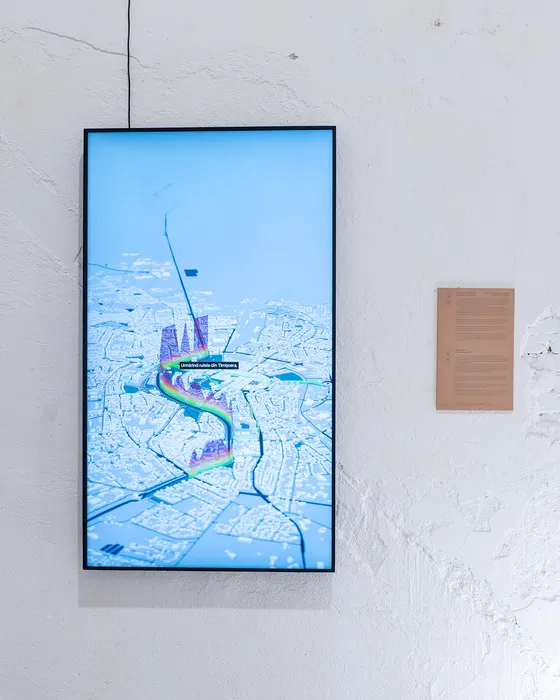
NB: In Lugoj, the old brick and tile factory, now Mondial belonging to Villeroy & Boch, is the only one still doing well, though it now produces sanitaryware. The other factories in Jimbolia, Cărpiniș, Biled, and Găvojdia are all closed, their sites abandoned or repurposed. The most modern factory in Chizătău, which had the only mechanised loading system in the country, was also shut down. In Timiș County, in Banat, the only factory left is Mondial Lugoj. All the others are black dots on the map—dead. I'm sorry to say it, but that's how it is.
CB: And in other regions, like Crișana-Bihor or Maramureș?
NB: There are still some functioning factories. In Zalău, the Cemacon factory, now acquired by Dedeman, is a pride—the largest in capacity. There is also a terracotta factory in Vadul Crișului and one in Salonta and the Helios refractory plant in Aleșd. But we suffered a tremendous strategic loss in Oradea: the tabular alumina factory. Tabular alumina is a top-tier material for rocket linings and advanced steelmaking. The Russians took over the alumina plant and moved the entire production line to Russia. They are smart, and we were foolish. How could we give away such advanced technology? It's shut down, gone, erased.
CB:The picture you paint is largely one of decline, but you also point to inspiring exceptions, like the IPEC factory in Alba Iulia.
NB: IPEC is one of the largest tableware ceramics factories in the world, with over 350 robots. The Covaciu family had a clear vision and focused on large-scale production and automation. I truly admire them. They started from zero, from something small in their backyard. What I also admire is their business acumen. They secured the right to sell to clients other than IKEA. I heard from Cristian (Covaciu, owner and CEO of IPEC) that 32% of their physical production brought in 52% of their revenue—and not from IKEA. This family is extremely inspired, well-organised, and an example to follow. You've never heard of any scandal or fraud involving them.
CB: Looking at the entire sector, what is the realistic future for Romanian ceramics?
NB: We must divide it into three parts. First, the ceramic construction materials industry—bricks and tiles. This has potential. We have the raw materials, and the surviving factories must be modernised and fully mechanised to survive. Second, tableware ceramics. Here, we cannot compete. We are flooded with Chinese goods, and we no longer have the domestic raw materials—the high-quality sands, feldspars, and kaolins are gone. The third branch is technical ceramics, for insulators and specialised components. I believe we've missed the train here as well; we lack the raw materials and the scale.
So, the only branch with a real perspective is the construction ceramics industry. That is the one that can still make sense.
CB: A recurring theme in your analysis is the critical lack of a skilled workforce.
NB: Where is the Professional High School in Alba Iulia? Where is the Master Technicians' School in Turda? They're gone. We don't have them anymore. When I worked in this industry, I used to train my own people. I had places to do that. They learned. But if we don't take care of the living part of the factories, we will smell death far too often. We need people, from top-level engineers to the most skilled workers. The human contribution hasn't disappeared; there is still a great need. But where are they now?
CB: In conclusion, how do you feel about efforts to place a new spotlight on the Romanian ceramic industry?
NB: I appreciate that you're taking an interest in things that many who should be doing this rarely care about. I value the fact that you care—about what was, what is, and especially what will be.