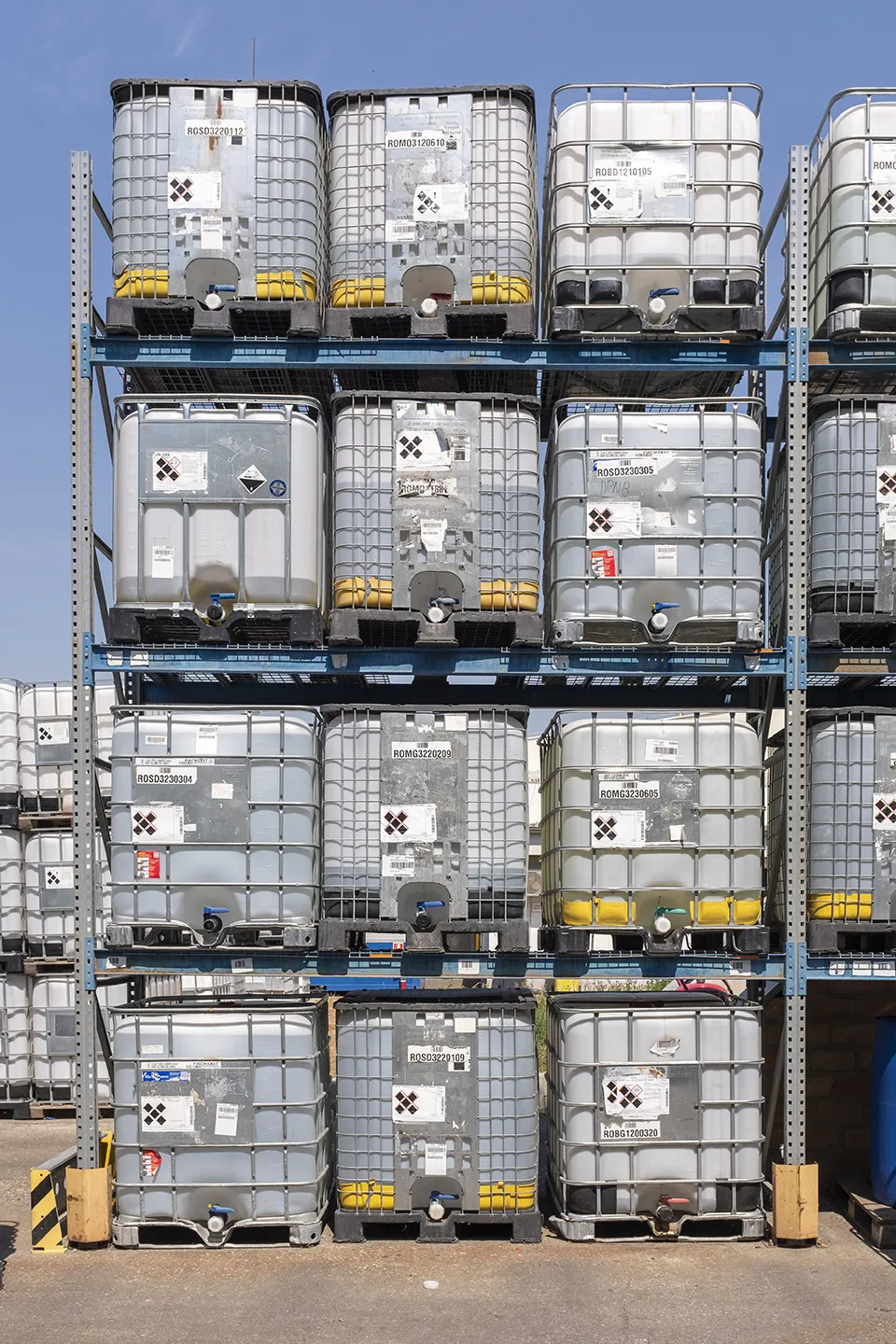
Brenntag is a company focused on distribution and logistics of chemical components with a history of 151 years globally and 25 years of operations in Romania. Its journey in the green transition reflects the obstacles that the chemical industry faces in committing to the European green policies, even when a company intends to do so.
To understand their process, we started from the people working in it. Raluca Pintea has dedicated 17 years to Brenntag; at the moment, she is responsible for coordinating quality, health, safety, and environmental standards (HSE) across the company's operations in Central and Eastern Europe. She has witnessed its gradual shift toward sustainability and its alignment with European Union regulations.
The heavy industry must go green
“The change came with the European Union’s Green Deal,” Pintea explained to us. They tried to introduce a range of green products even before, 12 years ago, but the project failed because the market was not ready to pay more for a green premium product.
The European Union adopted the European Green Deal six years ago, setting out a number of important milestones and constraints for a circular economy. The Green Deal is the overarching framework, but chemicals are targeted by specific EU policies. For Romanian operators, however, implementation is inconsistent. “Imagine an economic operator who must comply with at least seven major legislative packages at the same time”, Pintea highlights. The problem is not just the rules themselves, but the way Romania implements EU regulations, adding extra burden, creating chaos and extra costs.” At the same time, industrial producers in Romania have been aware since 2007 that they must reduce their emissions under the European Union Taxonomy for Sustainable Activities (EU ETS system) – a classification system that defines what counts as environmentally sustainable economic activity. Currently, they benefit from free carbon certificates for the emissions they generate through the EU ETS system, but starting in 2026, the number of certificates will be gradually reduced until 2034, which means that polluters will pay for all emissions generated, thus making it more expensive to produce using the same polluting technologies.
Despite its good intention, the European Green Deal has its critics. Some scientists argue that the EU attention has been too much on “the objectives” that address the consequences without considering the real causes of climate change. In the EU's Green Deal, the principal objective with regard to chemicals appears to be the attainment of zero pollution which of course is quite impossible.
Industrial emissions are harder to abate because of process-related CO2. There are two types of emission sources – energy-related emissions (burning fossil fuels to provide the heat and energy needed for high-temperature industrial processes) and process emissions (inherent to the production process). Although Romania has shifted somewhat away from industry since 1990, the industrial base is both economically important and highly carbon intensive. The chemical industry accounted for 25.1 million tons of CO₂ emissions four years ago in Romania. In comparison, Romania’s transport sector accounted for approximately 19 million tons of CO2 emissions in the same year.
Chemicals Strategy for Sustainability is a part of the European Green Deal adopted five years ago to encourage sustainable alternatives and to improve the assessment and management of chemical risks. It restricts the use of harmful substances, makes imports more closely monitored, and pushes companies to sell cleaner, more sustainable products. For Brenntag, this means checking its supply chains more carefully, cutting emissions from transport and warehouses, and helping customers switch to safer alternatives.
“The Green Deal comes and says – we, the European Union, are committed to moving away from fossil fuels”, Pintea says, “but we currently have neither the infrastructure, nor the full production capacity or the vision to reach the point where we will be self-sufficient”.
A crucial element in the process of supporting the decarbonisation of energy-intensive industries is the modernisation and expansion of electricity transmission and distribution networks – the development of CO2 infrastructure and hydrogen infrastructure. CO2 infrastructure is essential for the chemical industry, which will also rely on Carbon Capture and Storage (CCS) technology to reduce its process emissions. CCS is a process that prevents carbon dioxide from large industrial emitters and power plants from entering the atmosphere by separating it, transporting it via pipelines or ships and storing it permanently deep underground in geological formations.
Moreover, the “Fit for 55 package” is a set of proposals by the European Commission aiming to reduce greenhouse gas emissions by 55% by 2030 and achieve climate neutrality by 2050, as mandated by the European Climate Law. This package includes revisions to existing laws and new initiatives across various sectors.
The European Union does not offer significant dedicated national funding streams for implementing green changes. European funds are essential, but limited. In fact, a large part of state aid schemes are financed from European funds. Therefore, most of the financial support for industry is granted through each state aid. “Fiscally more restrained countries, such as Romania, risk being outpaced by the generous industrial support schemes implemented in countries like Germany and France and thus falling behind in terms of the pace and scale of industrial decarbonisation”, Luciana Miu writes, an expert in industrial decarbonisation and building energy efficiency.
There are a number of uncertainties when it comes to financing this transition and practical implementation methods. Despite the constrained public finances, Romania has access to the Modernisation Fund and the Innovation Fund – a powerful EU funding stream. If used wisely, these funds could be paired with targeted state aid to support competitive industries, while also unlocking private investment. Another untapped lever is green public procurement – the process through which public authorities seek to purchase works, goods, or services that have a low environmental impact throughout their entire life cycle. Economists say that it is a more effective alternative for supporting industry in the green transition process, with a more limited impact on the national budget. By implementing a functional green public procurement system, Romanian industry would benefit from predictability and support in the decarbonization process, thus maintaining its competitiveness at European and global level.
As a lower-income EU member, Romania is also eligible for additional support through mechanisms like the Cohesion Fund — that supports investments in the field of environment for countries with a gross national income per capita below 90% EU-27 average. Moreover, Romania is geographically well-positioned for the green transition. It holds significant potential in renewable energy, green hydrogen and even onshore CO₂ storage. If it can align its strategy with its resources, Romania could shift from laggard to leader in Europe’s industrial decarbonisation push.
Time, however, is not on our side. Accessing and deploying EU funds quickly will be crucial, and a clear national industrial strategy is needed to prioritise this. At the end of 2023, the Romanian Government published the long-awaited Romanian Industrial Strategy 2023-2027 promised in the governing coalition's program two years ago. The publication of this strategy is an important step in establishing an institutional framework capable of managing the multiple and intersecting challenges facing Romanian industry. However, it raises more questions than it answers in terms of addressing these challenges.
Brenntag: Local Realities
Brenntag is a German-headquartered multinational and DAX40-listed company, therefore it is supposed to align with global sustainability standards. Its Romanian operations are centered in Chiajna near Bucharest and their model illustrates the tension between global sustainability commitments and local constraints.
One of Brenntag’s biggest obstacles is convincing clients to adopt greener – but more expensive – alternatives. Higher prices for sustainable products are a more pressing issue in Romania than in other EU countries, as lower disposable incomes push consumer preferences toward the cheapest products, and companies respond by choosing the least expensive raw materials. “We have solvents that are natural, based on lactic acid, instead of the classic toxic ones used in paints and coatings”, Pintea explains. Furthermore, companies must pay twice for the legal disposal of chemical packaging waste: once through the Environmental Fund tax, and again through the actual disposal process, which can only be legally carried out by sending the waste to landfills.
“But the price difference is from one euro per kilo to three. In a cost-driven market like Romania, producers simply cannot accept that.” While Nordic and Western European customers are more willing to pay the premium, Romanian manufacturers remain reluctant.
Brenntag has woven sustainability into many aspects of its Romanian operations, guided by ISO 26000 standards for social responsibility. The company screens its suppliers, requiring minimum social and environmental standards, SEDEX membership (Supplier Ethical Data Exchange), and regular audits. It engages with the community through partnerships with NGOs like Plantăm Fapte Bune for tree planting, sponsorship of education and sports initiatives, and a preference for sourcing from local suppliers.
Brenntag relies on outsourced logistics rather than a proprietary truck fleet, enabling optimized routes and fewer empty returns, and it is gradually increasing intermodal transport, though Romania’s weak rail infrastructure remains a constraint. “In Romania it’s almost impossible.”, Pintea says. “We do not have a functional rail freight transport system. We do not have a system to put containers on trains, we do not have mechanisms to return empty containers. So we try to make intermodal transport work, but almost everything stops at the border.”
At its Chiajna site, the company invested in new roofing, rainwater collection for irrigation, composting, and upcoming solar panels, they claim.
When it comes to carbon emissions accounting, Brenntag developed its own application that is also TÜV certified – a trademark meaning that a product, service, or process has been tested and verified to meet specific safety, quality, and sustainability standards by a Technical Inspection Association. Clients can purchase access to this platform and calculate the carbon emissions associated with the products they buy from the company, independently and in real time. There is a vast amount of information behind it – Brenntag relies on data provided directly by their suppliers or estimations, if the suppliers do not provide their data.
In terms of packaging, Brenntag sells most of its products in returnable packaging. They issue a separate invoice for the package and the clients have 30 days to return it. If they return it within that period and in good condition, the company returns the money for the packaging. This system allows them to avoid putting large volumes of plastic packaging into circulation that would otherwise remain in the market.
The bigger picture – Romania’s struggles
In Romania, systemic barriers hinder the adoption of greener solutions. We face outdated railway infrastructure that limits intermodal transport and regulatory incoherence. The market remains heavily price-driven, preventing companies from absorbing the higher costs of sustainable alternatives such as lactic-acid-based solvents, which are three times more expensive than conventional ones. Public procurement rules further entrench this problem, as the “lowest price wins” criterion blocks the uptake of sustainable options even in critical sectors like water treatment, where mercury-free flocculants could be used. At the same time, universities continue to focus on traditional oil-based chemistry, neglecting areas like green chemistry, chemical recycling, or hydrogen, and the absence of state incentives or subsidy schemes leaves little room for modernization or innovation.
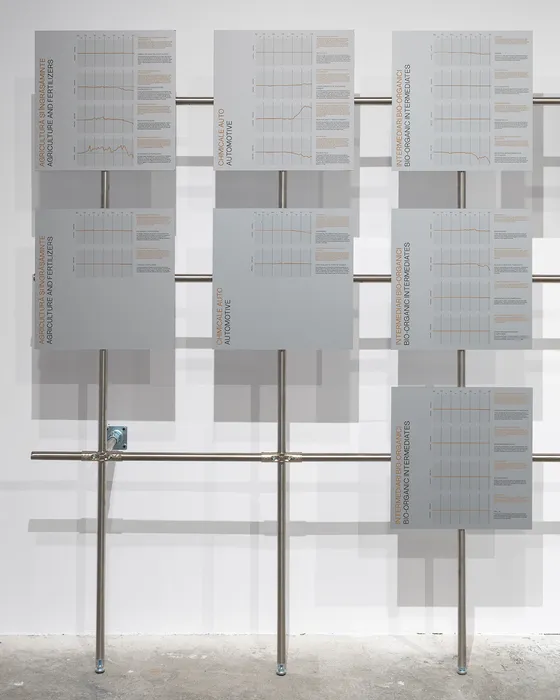
Romchimica, the Romanian Chemical Companies Association, set up a report last year on the Transition Pathways of Chemical Industry towards Green Economy and Digitalization. There are a number of strategies being pursued to reduce the negative impact on the environment, several: replacing fossil energy with renewable energy, increasing efficiency in energy and raw material consumption, substituting fossil-based, polluting, or energy-intensive raw materials and intermediates with more sustainable alternatives, reusing and recycling products at the end of their life cycle, and improving logistics through shorter distances and less polluting transport methods. In order to do that, the Romanian chemical industry must become more resilient. The industry needs support from the government, as the responsibility can not fall only on companies and the chemical sector. This is a shared objective.
The report suggests that the Romanian state should create a framework that encourages research and development within existing companies, improves communication, technology transfer, and opportunities to showcase new technologies both domestically and abroad, supports the industry in developing and producing new or improved technologies locally, and attracts investors capable of creating markets for Romanian companies.
What’s next?
In July 2025, the European Commission presented a plan to rescue, modernize, and reinforce the EU’s chemical industry, which is currently facing severe challenges. High energy prices, increasing global competition—particularly from China and the United States—and declining production in Europe have put the sector under significant pressure. The plan is structured around several key directions:
- Protection and resilience.
The EU will establish a Critical Chemicals Alliance to reduce dependency on risky imports and to secure Europe’s supply chains. This measure is aimed at ensuring that essential chemicals remain available within the Union and that strategic industries are not exposed to vulnerabilities from external suppliers. - Affordable and green energy.
The plan promotes affordable natural gas, low-carbon hydrogen, carbon capture and storage, and increased use of renewable resources. - Innovation and sustainable products.
The plan includes incentives and funding to foster the substitution of polluting substances with cleaner, safer alternatives. Investment will be directed toward developing “green chemicals” and advancing recycling technologies, especially chemical recycling. This will not only drive sustainability but also create new markets for environmentally friendly products. - Simplified regulation.
The EU recognizes that the current regulatory framework can be excessively burdensome. The plan therefore proposes to streamline requirements for labeling, cosmetics, fertilizers, and related sectors.