How distant decisions enter the soil, the work of a farm and eventually the body
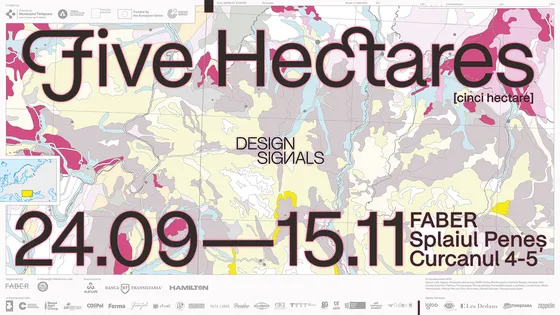
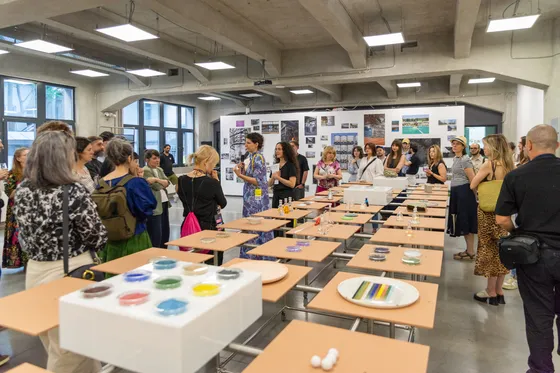
For its fourth edition, Design Signals turns to Romania’s agri-food industry. Curator Martina Muzi discusses the title Five Hectares, the influence of data on agriculture and the process of building an exhibition from encounters across Timișoara and Banat.
Why did you choose Five Hectares as the title?
Five hectares kept appearing as a benchmark in Norbert Petrovici’s research: in the language used to distinguish small, medium and large farms; in the distribution and consolidation of land after socialism; and in the forms of European support available to farmers.
Petrovici found this extraordinary imbalance between the very large number of farms below five hectares and the relatively small number of much larger farms. The larger farms cultivate a great deal of the land, but they do not necessarily own all of it. They may rent many small plots from individual landowners. A farm that looks like a single territory can therefore contain many different relationships and histories.
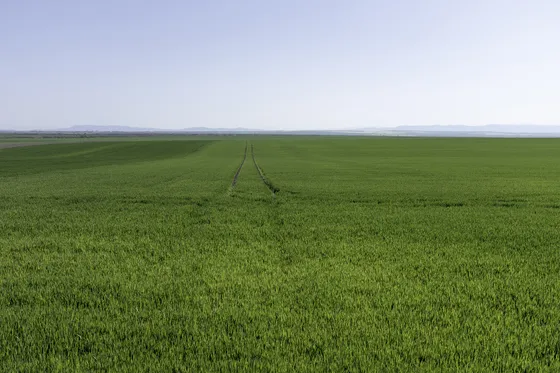
Five hectares sounds like a straightforward measure, but it gives us a scale from which to enter more complex questions about ownership, access to technology, agricultural practice and the kinds of markets a farm can reach.
What made you want to investigate the agri-food industry now?
At the beginning, we asked Petrovici to look at how agriculture is changing from a land-based industry into one increasingly organised through data. This does not mean that land is becoming less important. It means that another layer of ownership and control is being placed over it. Who owns the platforms? Who can access the information? Where does the data collected by machinery go? These questions increasingly influence how decisions are made on a farm.
This transition also happens very differently at different scales. Large farms have more capacity to introduce data infrastructures and sophisticated machinery. Smaller farms and local producers may not be able to access them at all. The divide between farms therefore concerns technology and information as well as land and production.
How does data change what happens on a farm?
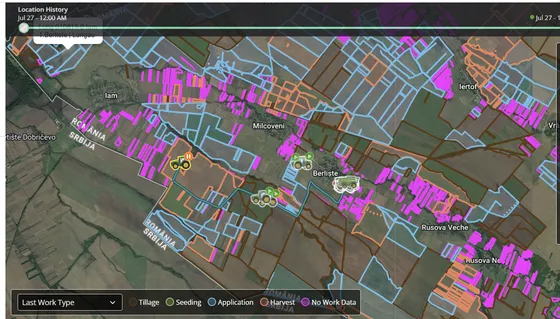
We visited a large farm where digital systems gather information about soil conditions, seed distribution, weather and machinery use. The farm uses this data to plan, monitor and increasingly automate its operations. The farmer does not always need to be physically present on the land to understand what is happening there.
The machinery is part of this infrastructure. These are incredibly expensive and technologically sophisticated objects. They collect data as they plant, treat or harvest a field and communicate directly with the farm’s digital platform. A great deal of labour then goes into maintaining the machinery and managing the information it produces. In some ways, the farmer also becomes a mechanic and a data manager.
The platform gives the farm a high degree of precision and control. At the same time, the platform and machinery usually belong to technological systems developed outside Romania. This creates another question: the farmer has access to the data, but so does the company that owns the platform. We are interested in this movement of information and in how it changes the relationship between land, labour and decision-making.
Petrovici’s research places considerable emphasis on risk. How are you approaching that in the exhibition?
Time is very important in agriculture. A farmer has to make decisions before the product exists. Money is committed to seeds, fertiliser, fuel and machinery before anyone knows what the weather will do or what the harvest will produce. The price may also be established through markets far beyond the place where the crop is grown.
Infrastructure changes a farmer’s relationship to this uncertainty. Grain is seasonal, so if you do not own or have access to storage, you may have to sell it at the moment of harvest. You have very little control over the timing or the price. Someone who can store grain has more freedom to decide when to sell.
This is where technology means more than digital innovation. A silo is also a technology. Irrigation is a technology. The ability to maintain machinery or process what a farm produces changes how dependent it is on other parts of the supply chain.
There are also farms where grain feeds animals, animal waste becomes fertiliser and different activities support one another. The length of the chain and the number of steps a farm can contain affect how it manages risk. We want to make these relationships visible without reducing agriculture to a single model.
Why is Banat the starting point for this investigation?
Design Signals always starts from Timișoara and the region around it. We try to understand a larger industrial architecture through the people, companies, materials and forms of knowledge we can encounter here.
Banat has a long history as an important agricultural region. Its rich black soil has supported large-scale cereal production, and the organisation of the land still contains traces of different political periods. These histories meet contemporary changes in climate, water and technology.
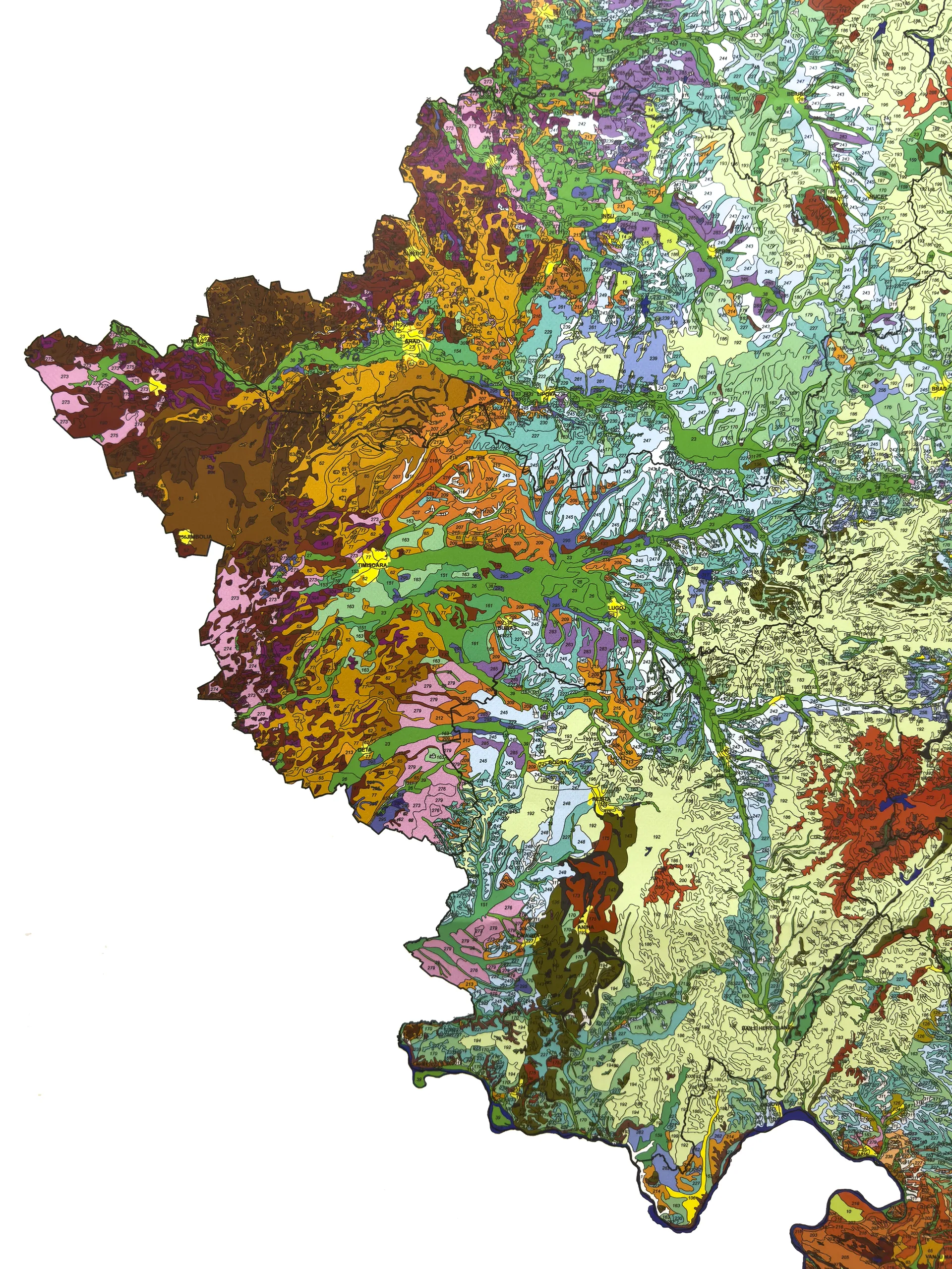
The soil itself complicates any general story. Even within five hectares, there can be several kinds of soil. Each responds differently to water, seeds, fertilisers and methods of cultivation. Soil is a living entity, but within large-scale production it is also continuously measured, treated and reconstructed.
Being specific about Banat allows us to approach global agriculture from somewhere tangible. We begin with a farm, a machine, a market stall or a particular crop and follow the relationships that extend from it.
You have described agriculture as a vertical architecture. What do you mean by that?
Five hectares initially gives us a horizontal image: a surface of land and the way it has been divided. We can also look vertically through all the technological layers acting on that land.
At one end there are satellites and monitoring systems. Moving down, there are digital platforms, machinery and irrigation. Then there are seeds, soil and microorganisms. These scales are interconnected, and decisions made within one layer affect what becomes possible in another.
The type of seed and the qualities of the soil influence the crop, its seasonality, its need for water and the machinery used to cultivate it. The harvested product then enters storage, transport, processing and international trade. Together, these layers form an architecture, although it is difficult to see them all at once.
The exhibition is trying to reconstruct parts of this architecture through local cases. Each story makes one layer tangible and connects it to the others.
There have already been many exhibitions about agriculture. How are you finding a way into the subject?
That is what makes the topic challenging. Agriculture immediately opens into enormous questions about food, climate, technology and global production. These discussions can become very general very quickly.
Our way of working is to remain extremely specific. We begin from the people and situations we encounter in Banat. One story might follow a platform used to control machinery and production. Another might begin with the changing availability of water, or with the role of fertilisers in maintaining a particular soil.
These are small entrances into a much larger system. We are not trying to explain the whole of agriculture. We are assembling stories that make some of its relationships accessible and tangible.
Why describe the subject as “agri-food” rather than agriculture?
Agriculture can be entered from the field, but it can also be entered from the product and from the metabolism. Food brings the research into contact with health, the body, local production and cultural heritage.
Some of the processes between agriculture and eating are almost invisible. A crop may enter a long international supply chain and be transformed until its origin is difficult to recognise. At the same time, there are local producers growing vegetables and selling them directly in the market. These very different distances between the land and the body coexist.
The market is therefore an important image for the exhibition. It contains food and bodies, but it can also become a market of data, information and different scales of value. It allows us to place together parts of the supply chain that are usually separated.
What can design contribute to a system of this scale?
Both food and data can become unrecognisable. Food passes through so many processes that we lose sight of where it came from. Data is fragmented into specialised measurements that become inaccessible outside the systems using it.
For me, the way to approach this is to start from points in between and reconstruct stories around them. Design can follow a material, tool or process across several scales and give these connections a form.
Design Signals gathers these points of entry. They do not produce a complete image of the agri-food industry, but they allow people to move through its complexity and recognise how distant decisions enter the soil, the work of a farm and eventually the body.