
Bruno Baietto
Designer
Bread as a record of labour, technology and infrastructure
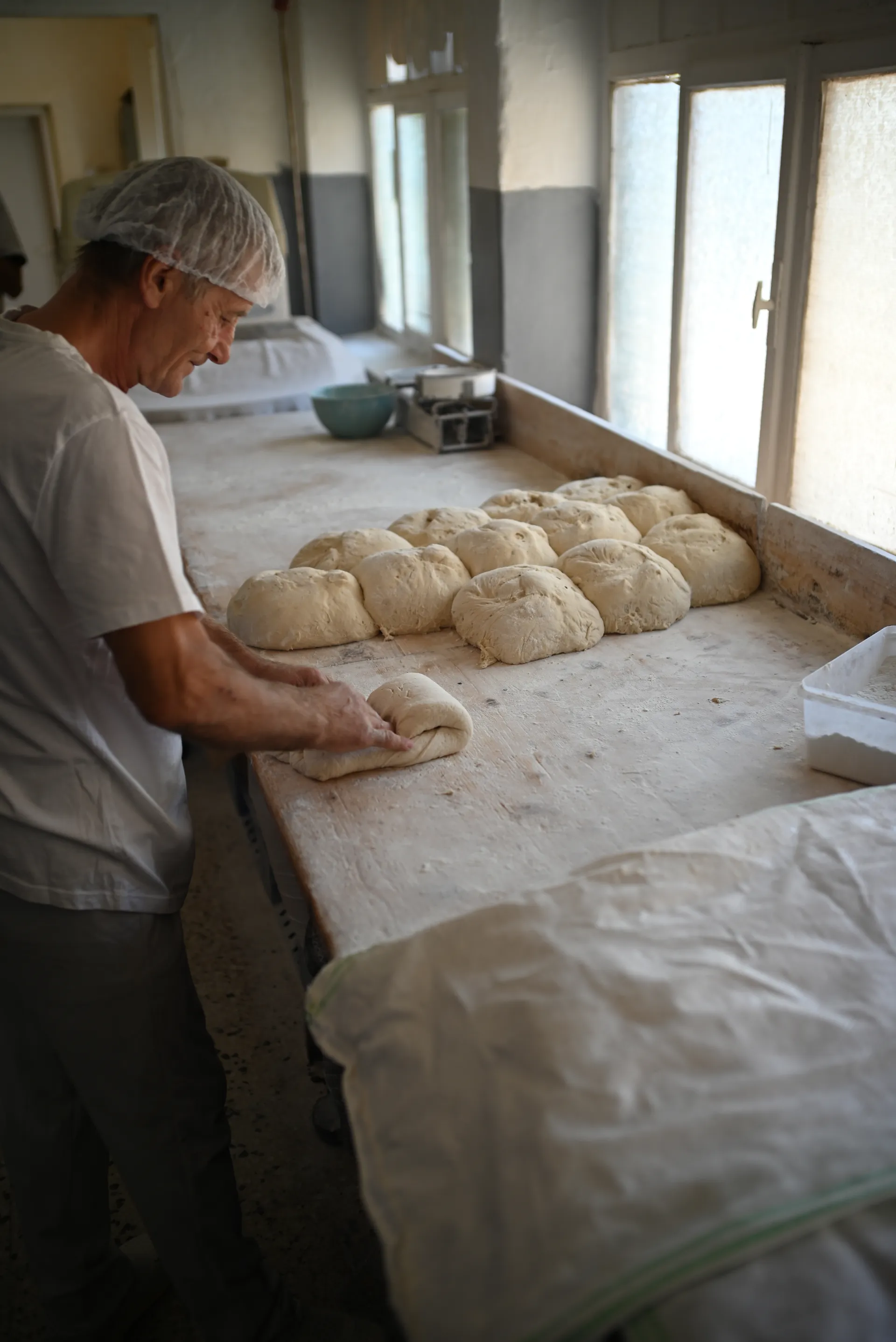
Beginning with two Banat producers whose breads emerge from contrasting production systems, the project takes its title from a Romanian expression linking the physical labour of kneading dough to the infrastructure of breadmaking.
Pită de Pecica has endured successive political and economic regimes. Made with locally harvested flour and a distinctive production method, it received protected designation of origin in 2023. Its celebrated four-kilogram loaf demonstrates the bakers’ embodied skill and the capacities of ovens claimed to date from the Austro-Hungarian Empire. Local lore affirms that, while being the favorite of Nicolae Ceaușescu, the bread was flown weekly to Bucharest by helicopter.
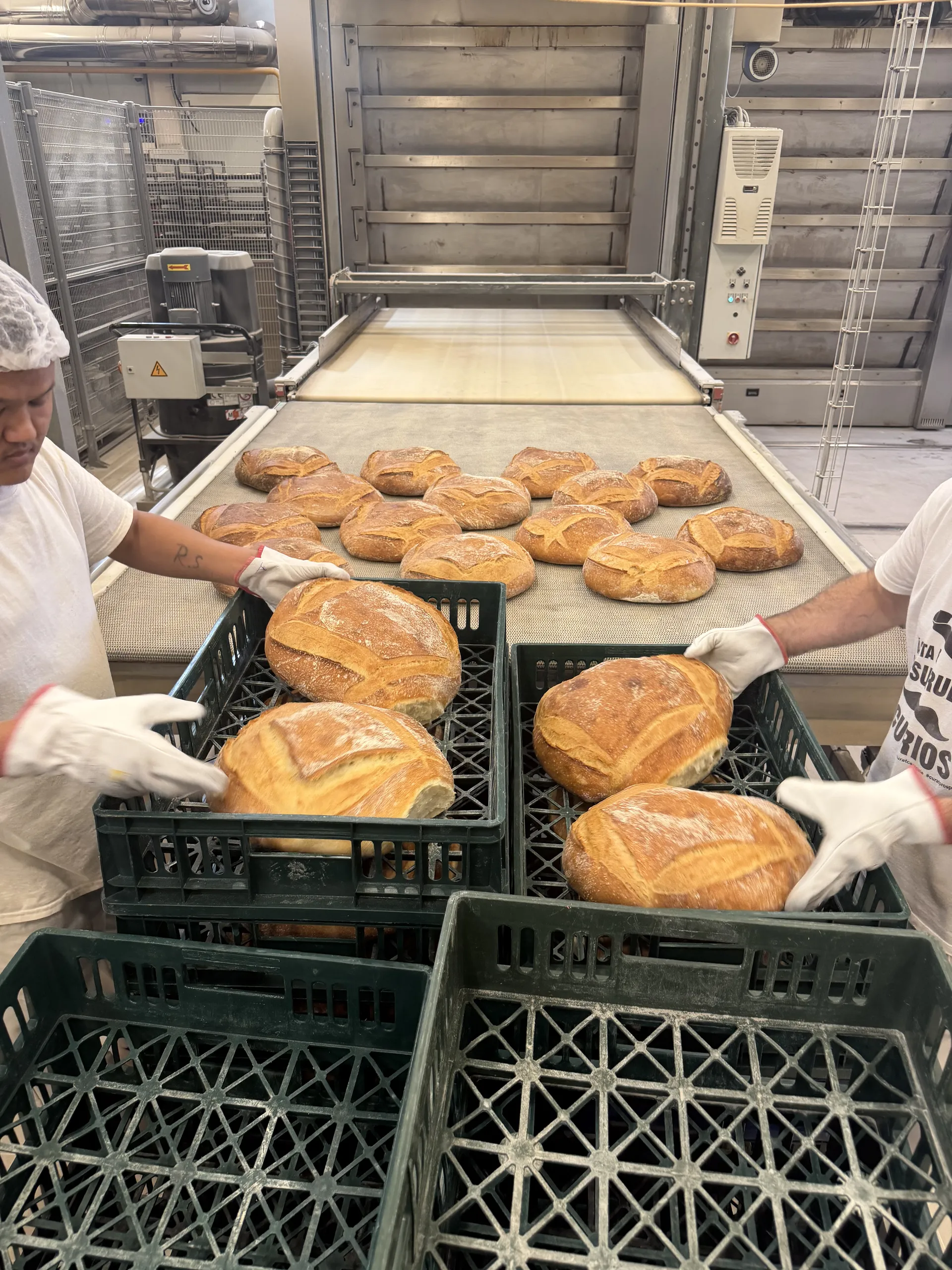
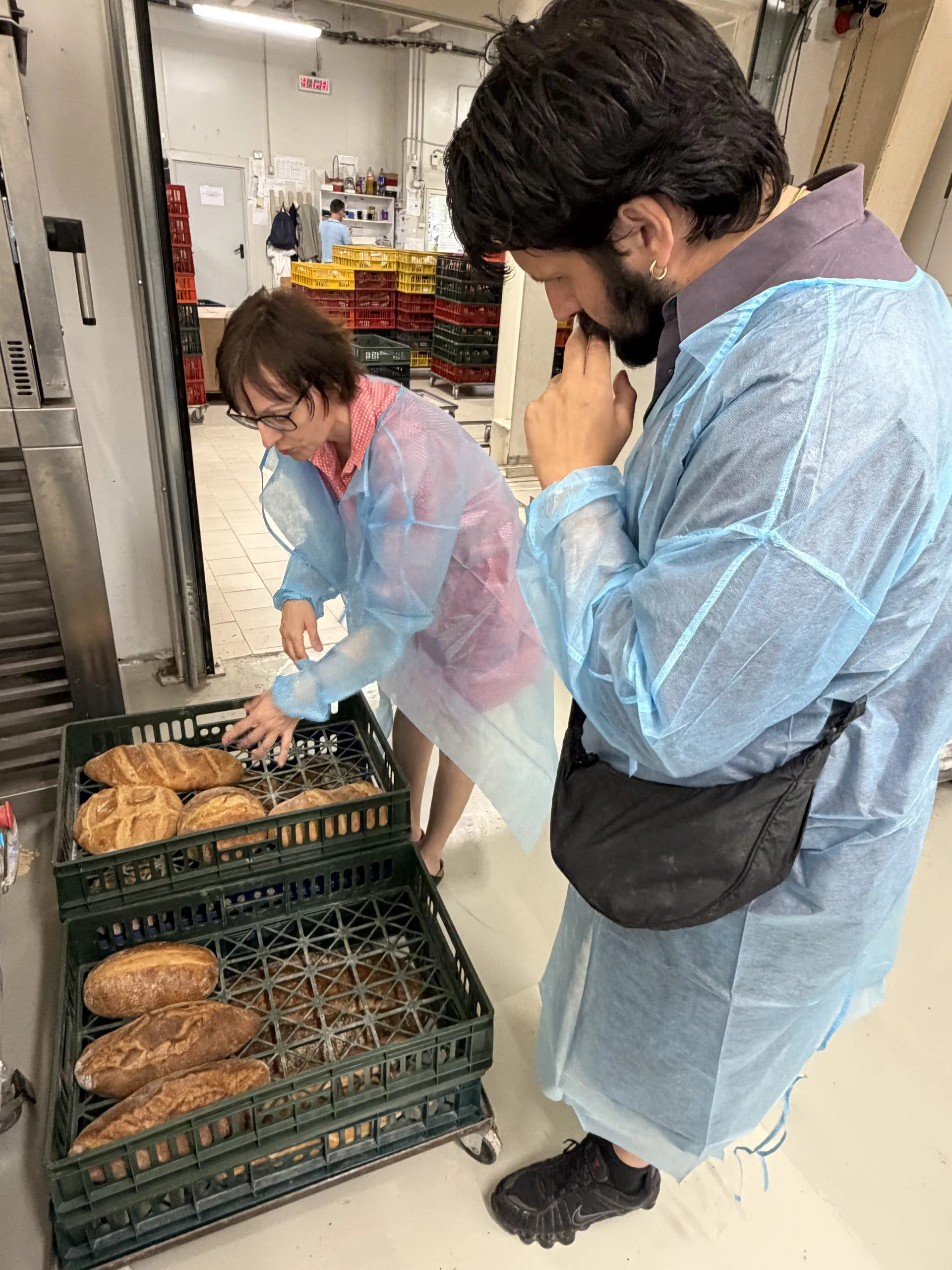
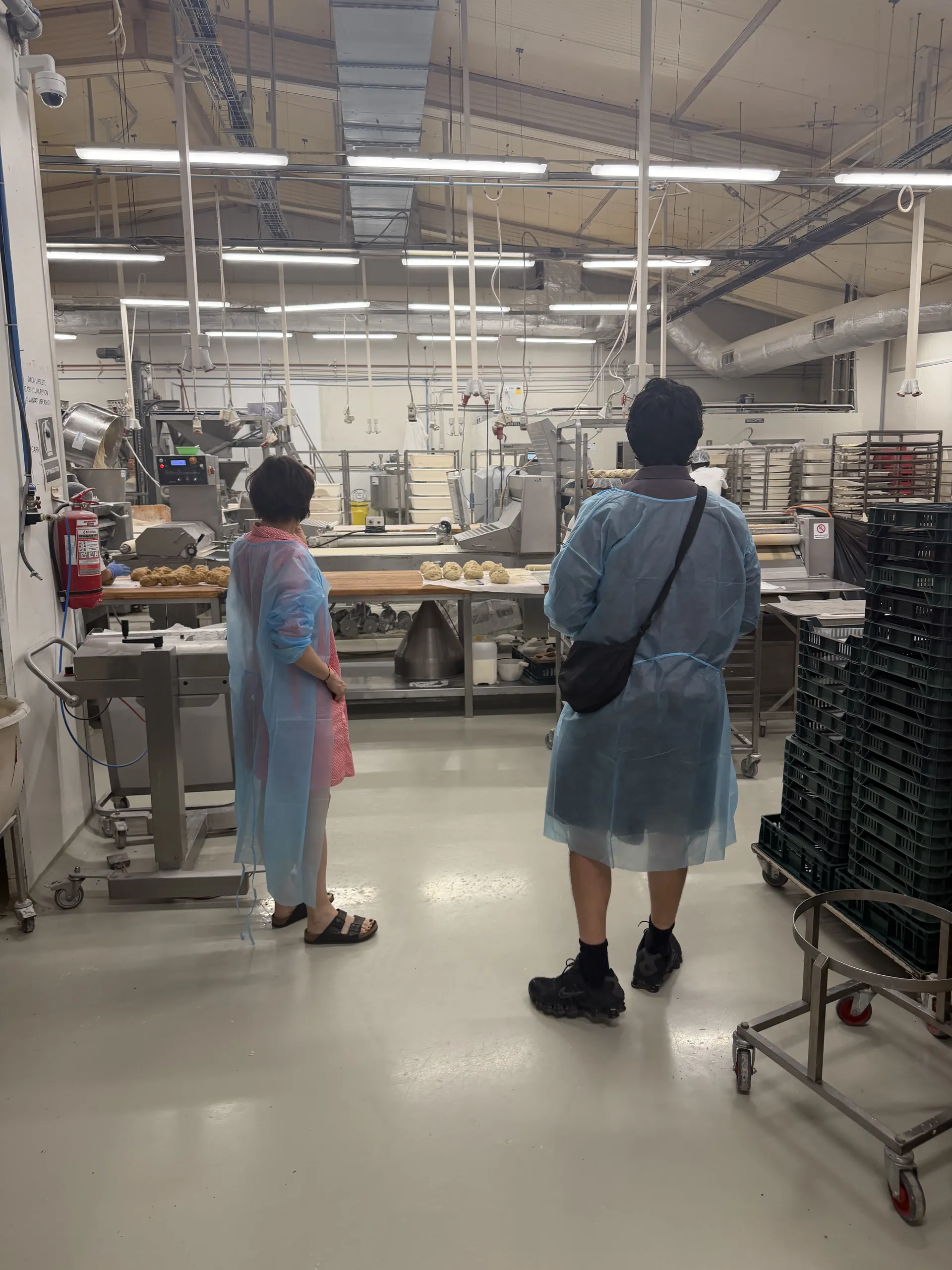
Prospero was founded in 1991, during Romania’s transition from socialism. Focusing on slow fermentation, quality ingredients, health benefits and controlled production, it developed a mechanised process for sourdough at industrial scale, balancing the precision of contemporary machinery with fermentation’s unpredictability, where irregularity becomes an aesthetic quality and sign of success.
Baietto used Pecica’s four-kilogram loaf as a temporary glassblowing mould. He then collaborated with Prospero to push its production system to its limits by making elongated breads to use similarly. These loaves transfer traces of crust, crumb and fermentation into objects that record two production histories and the labour, microorganisms, technologies and economic conditions embedded within them.
Credits
Collaboration: Prospero (bread and bread making processes), Atelier Stycle (glass blowing)
Bread supplier: Pită de Pecica
Locations: Pecica, Mediaş, Timișoara