Andreea Tron
Designer
Andreea Tron
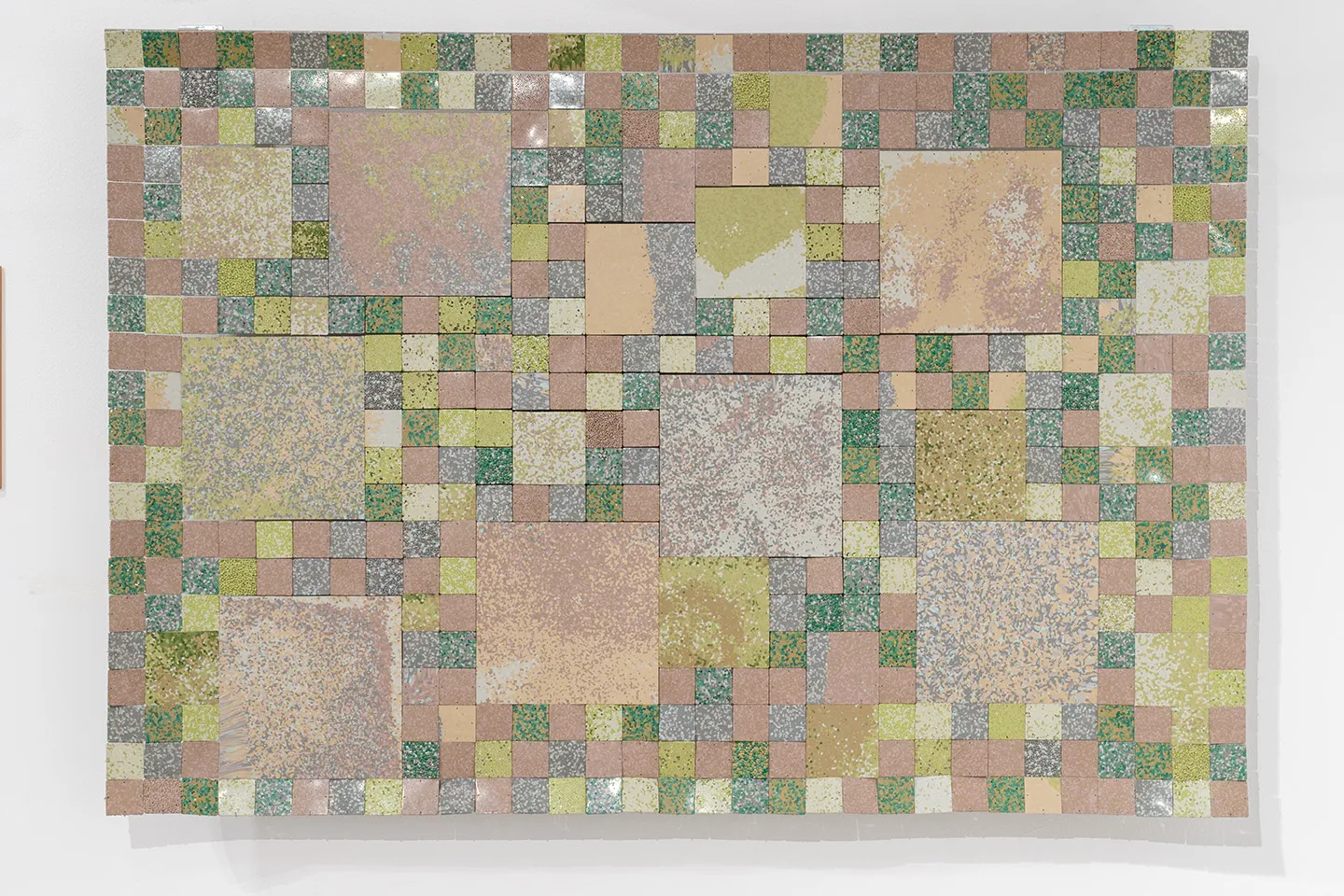
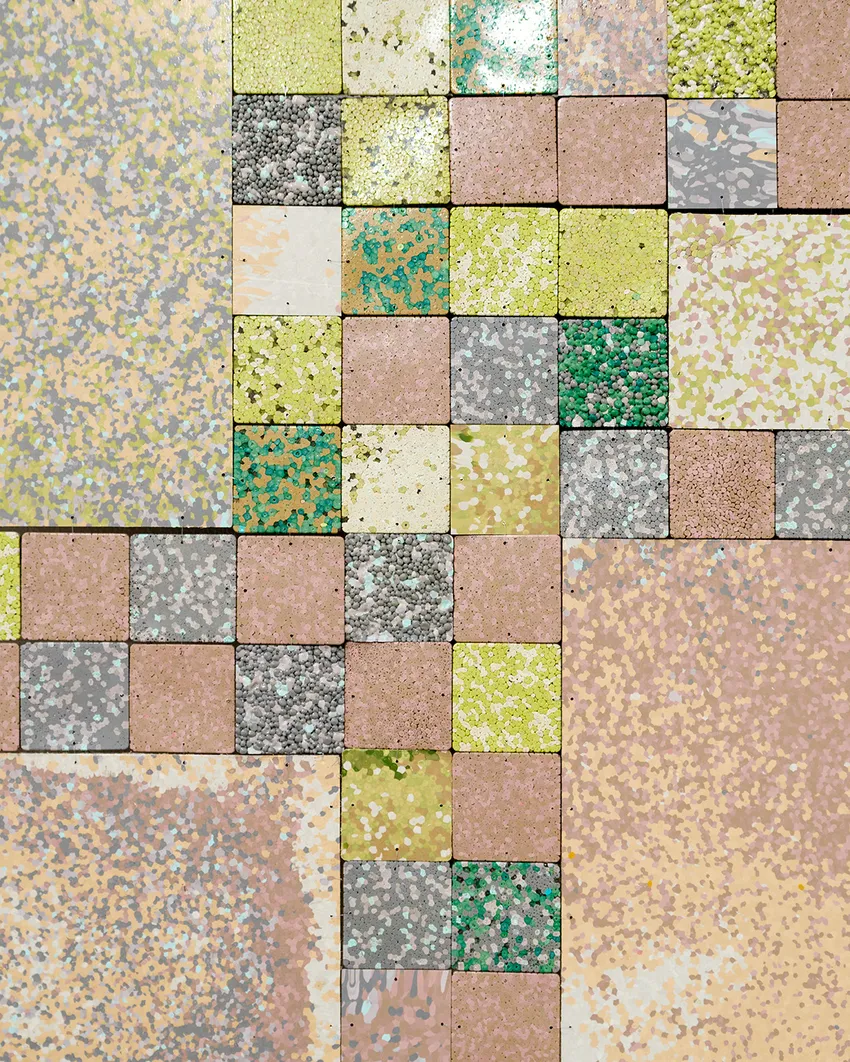
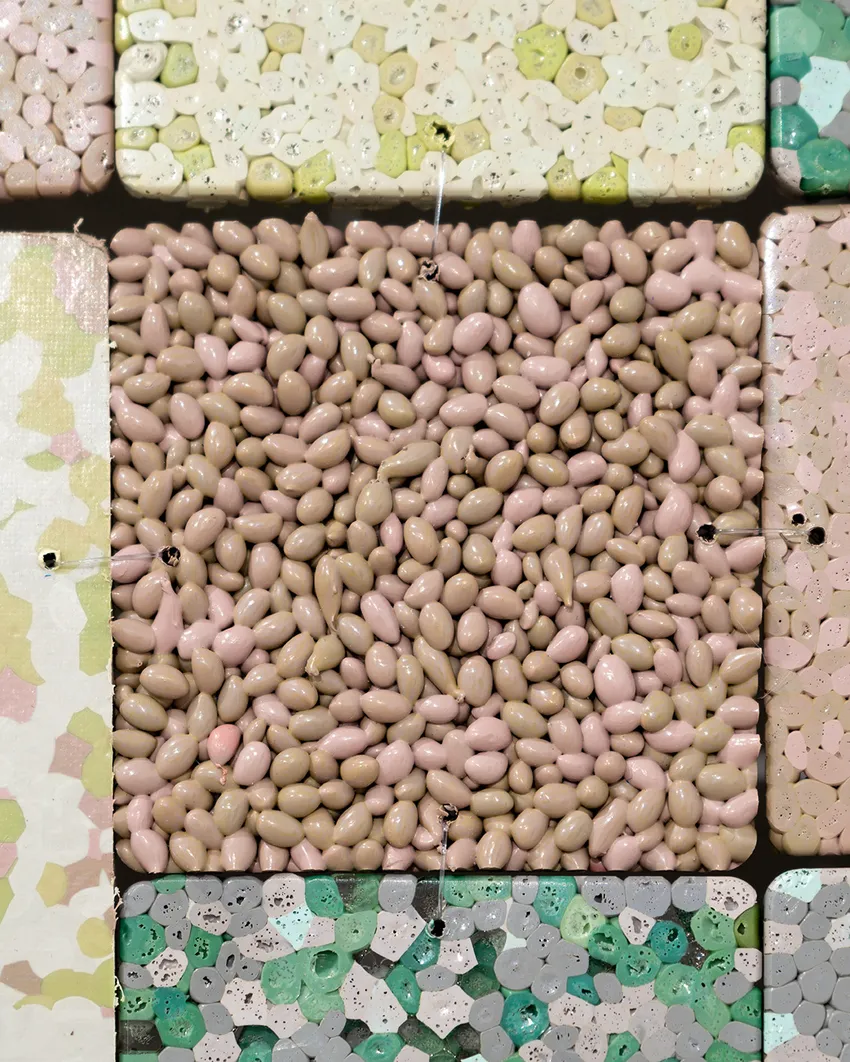
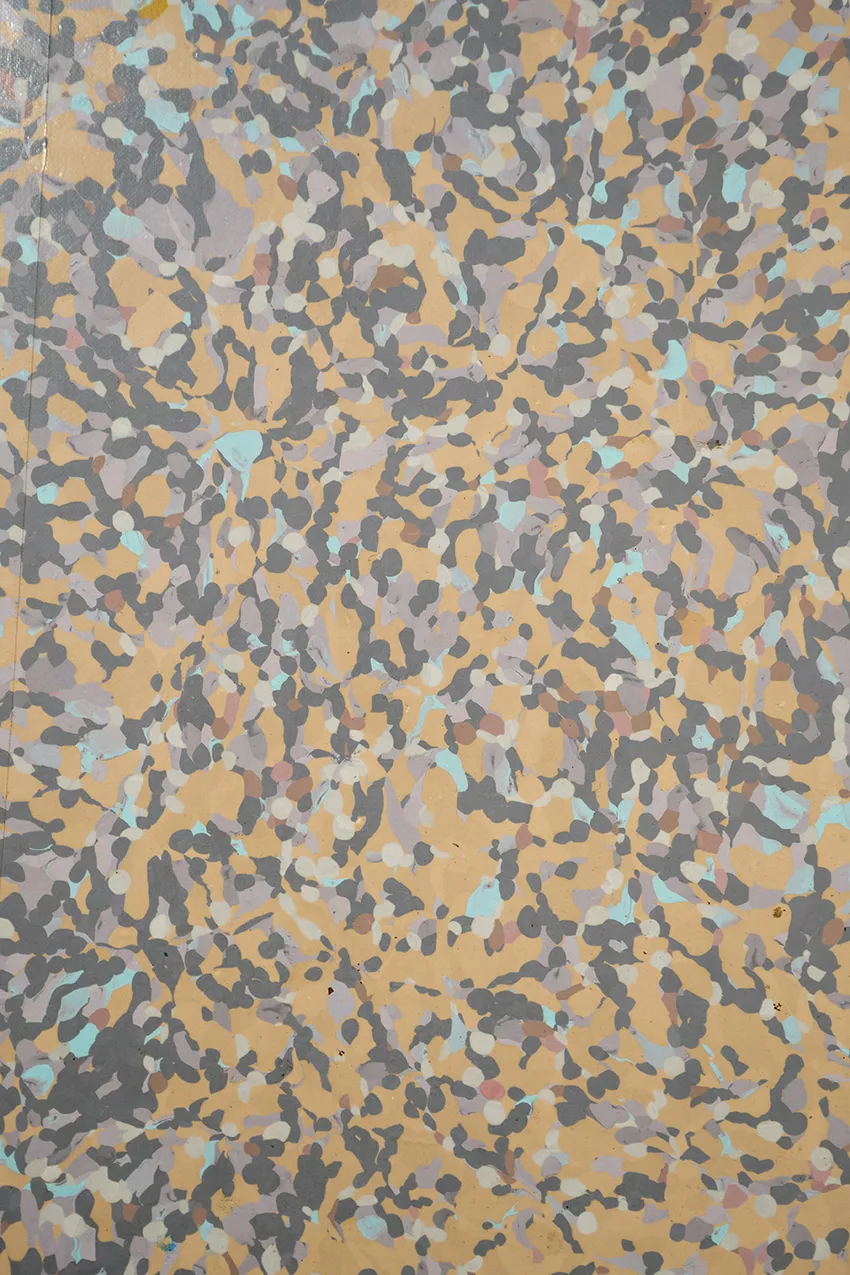
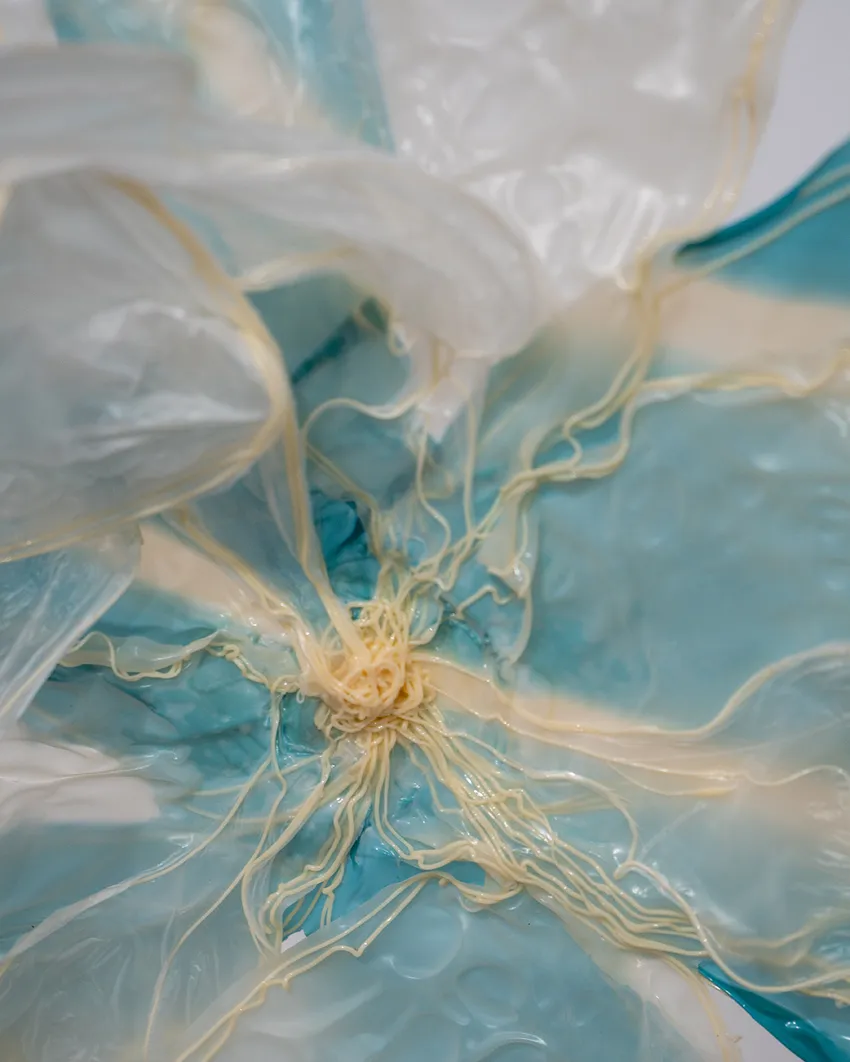
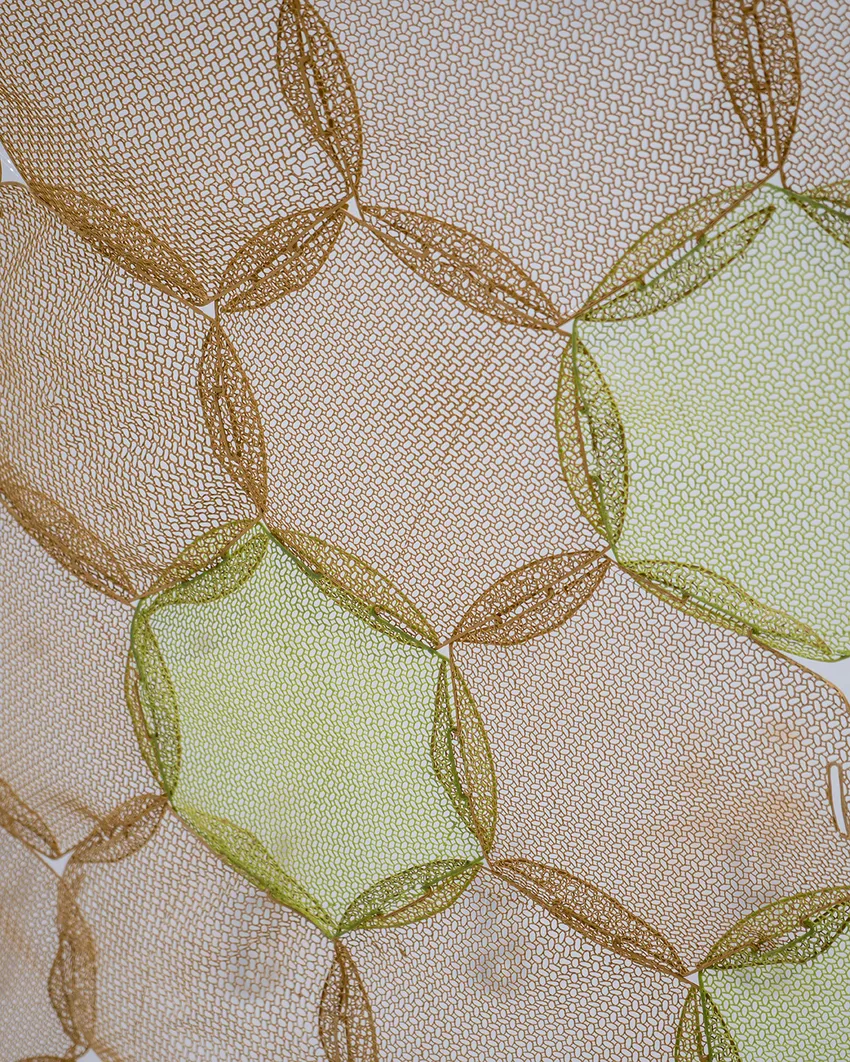
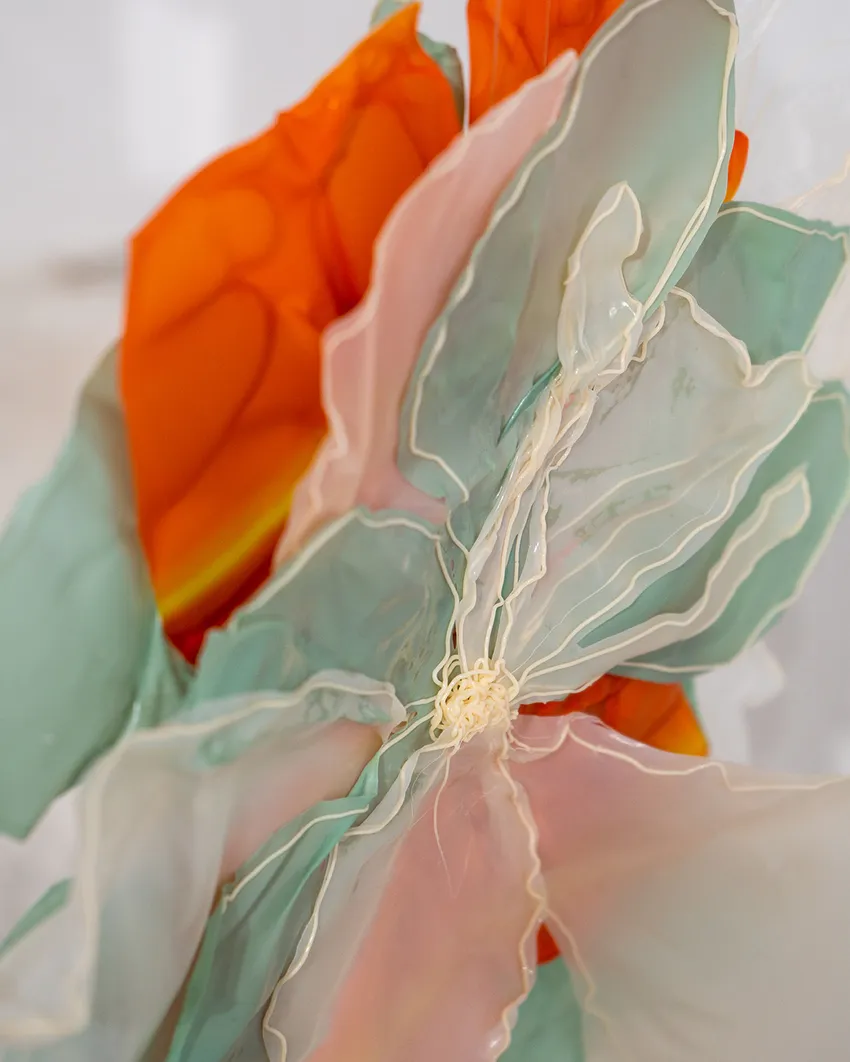
Uncommon Material explores how compostable bioplastics—typically designed to disappear—can be reimagined into lasting, functional surfaces. The project emerged from a direct collaboration with Promateris, a Romanian manufacturer of starch-based compostable bags and films. Within their production loop, offcuts and rejected batches are recycled into new granules. Some materials, however, are unmarketable due to colour variation, texture, or a strong corn scent.
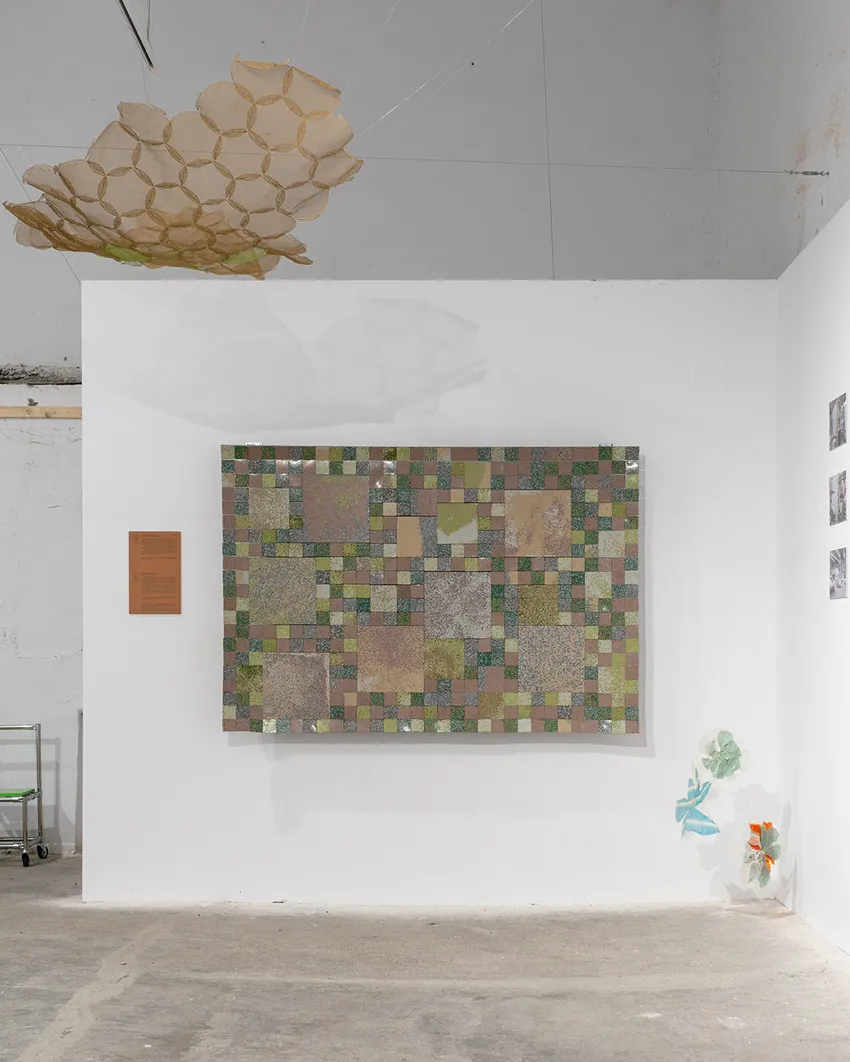
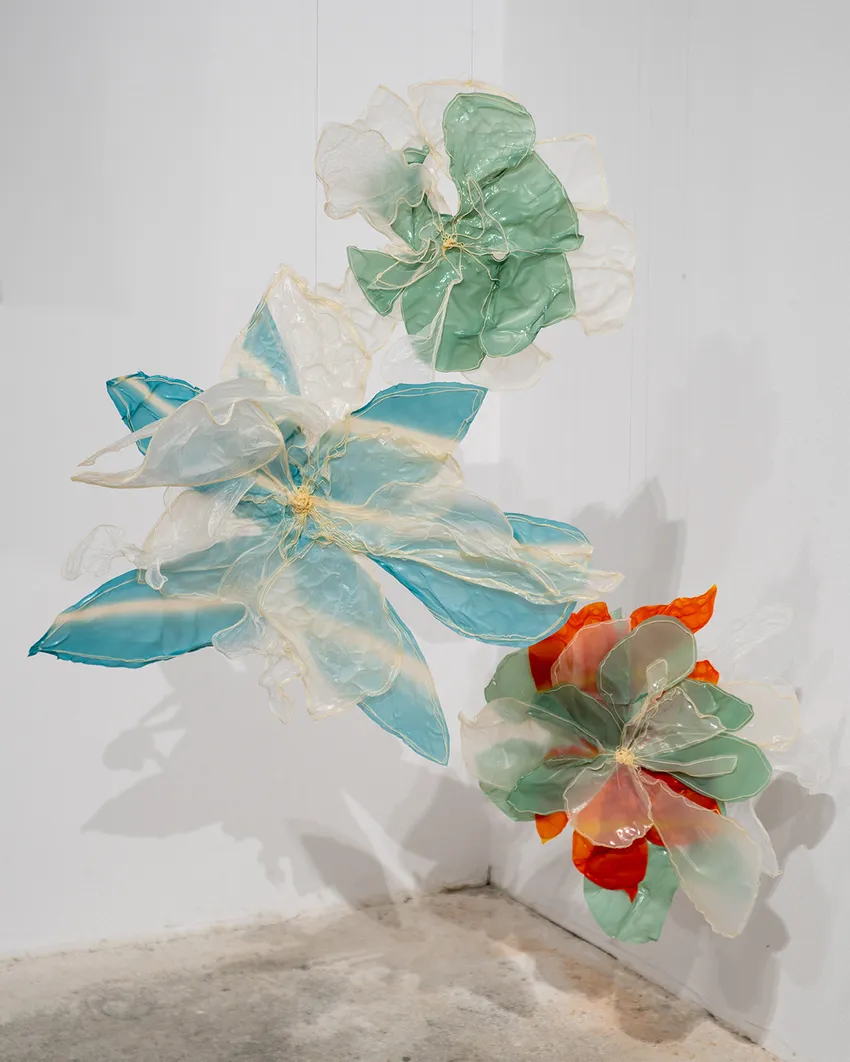
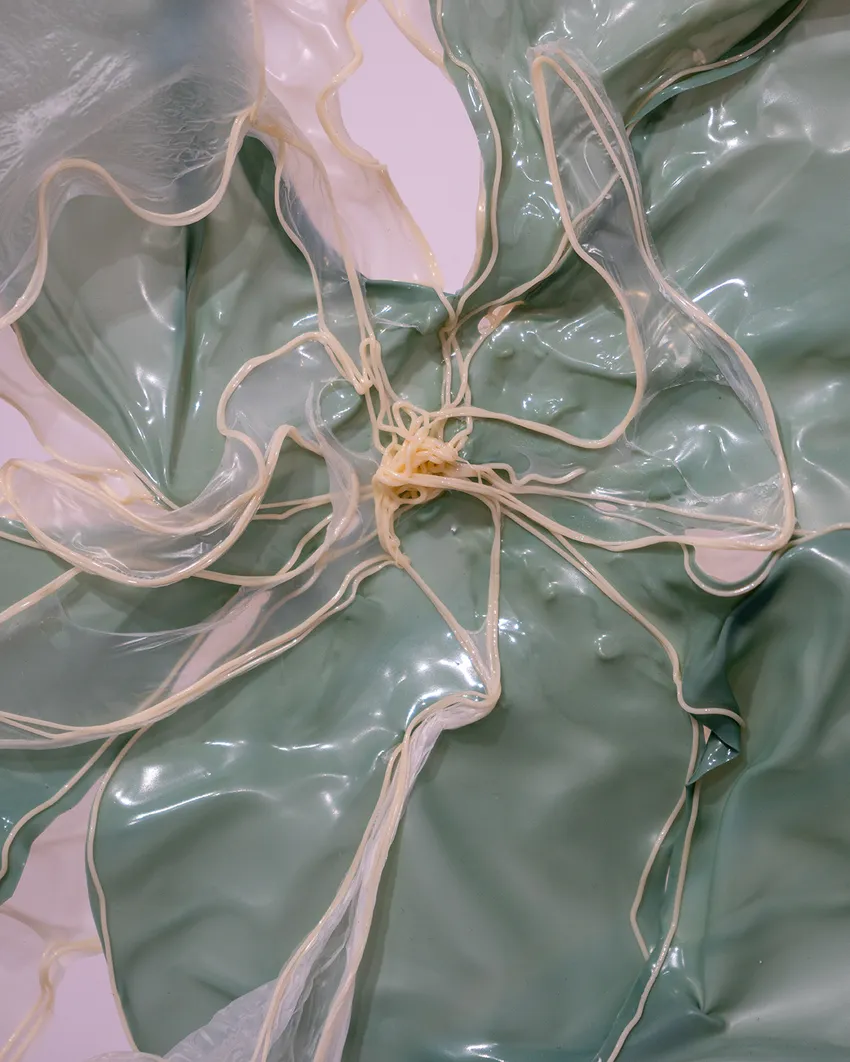
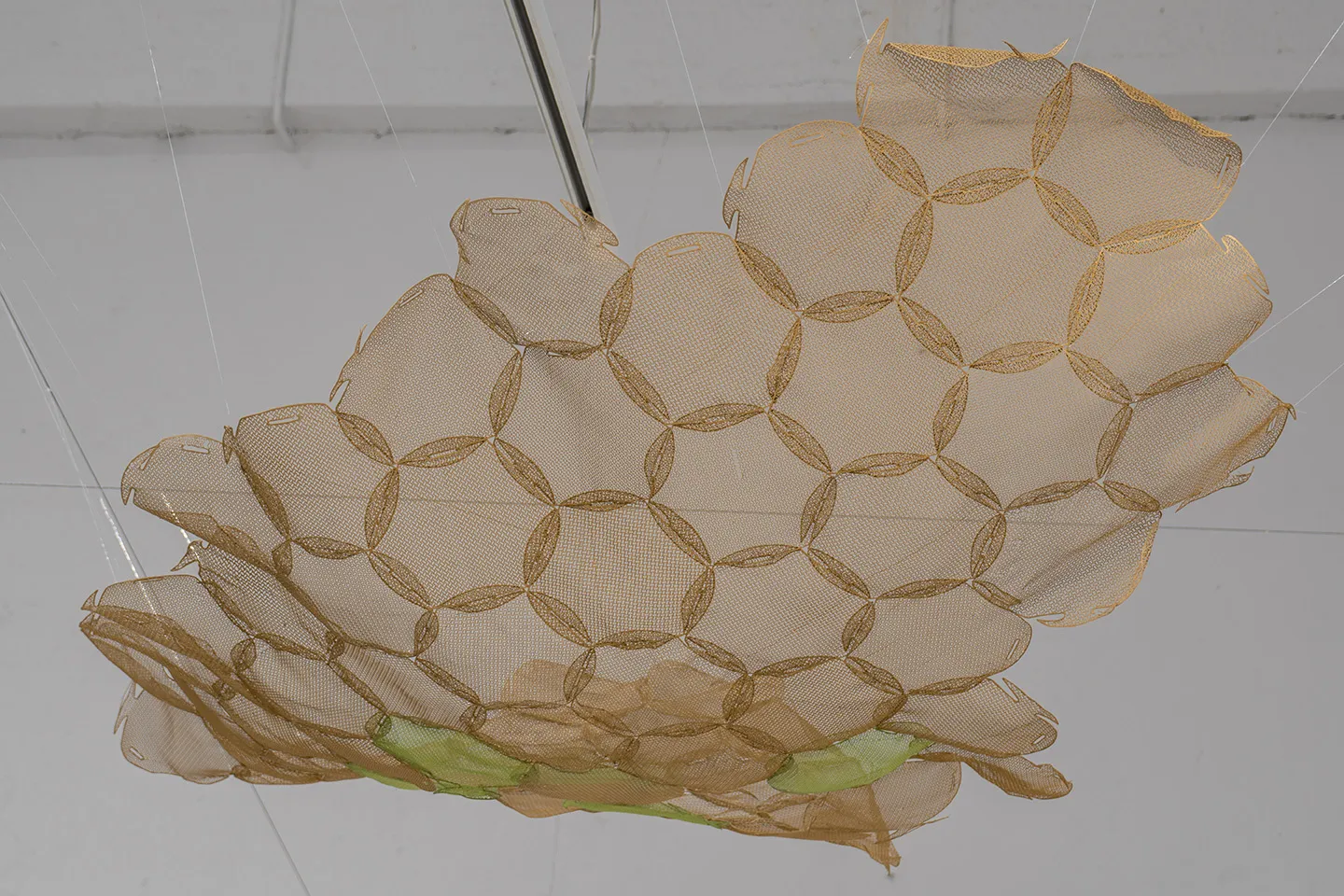
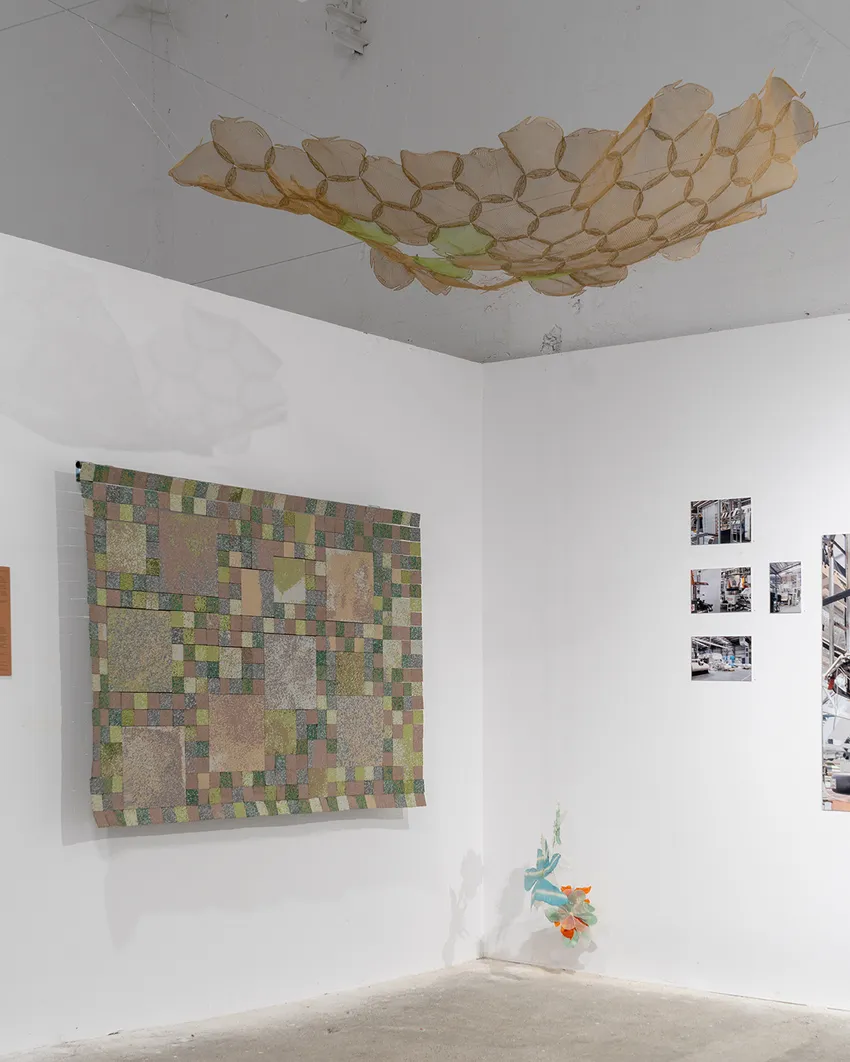
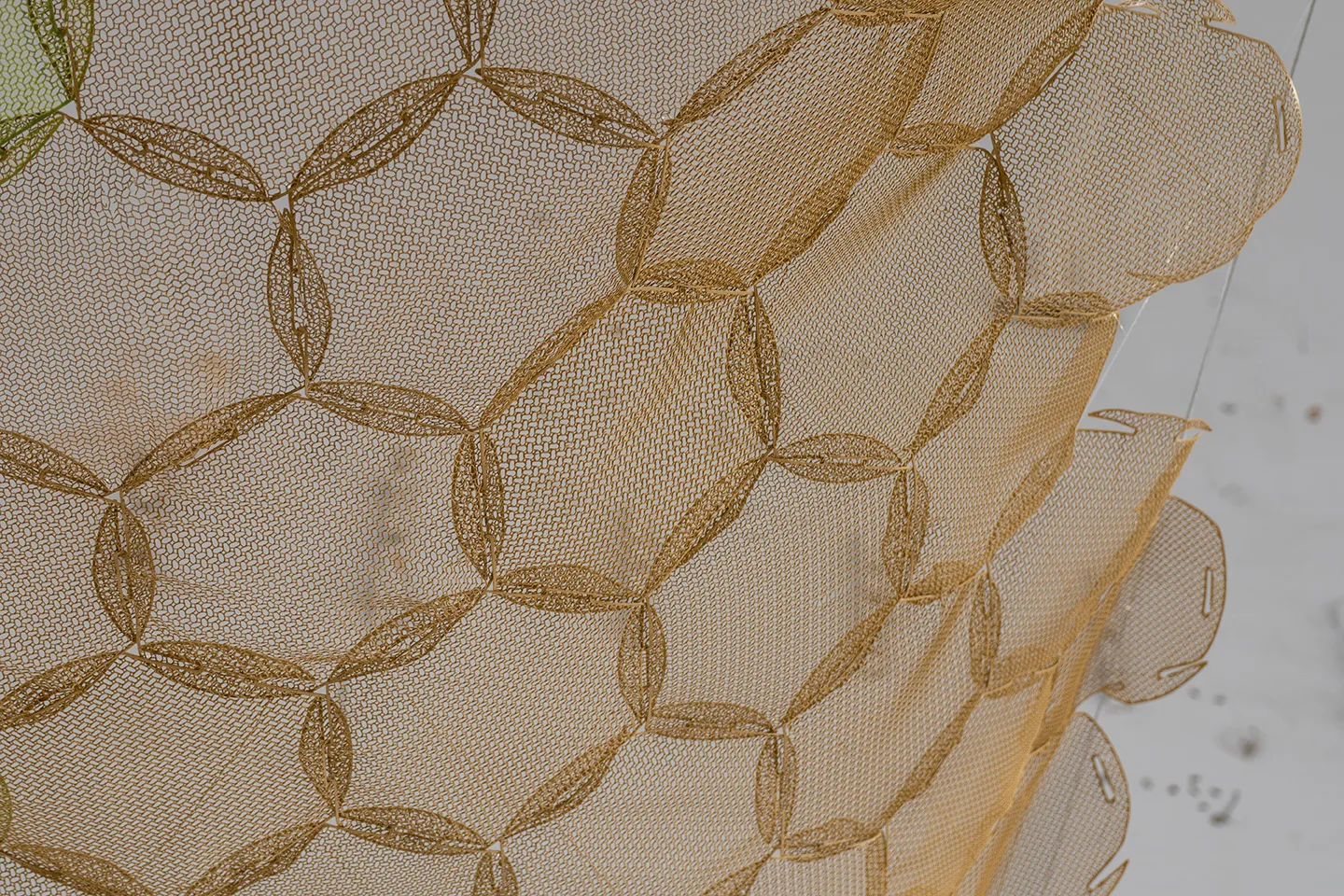
Rather than concealing these qualities, designer Andreea Tron highlights them. With the factory as a starting point and the source of the material and the investigation, she developed together with two universities, three surface typologies: a compact ”tapestry”, a translucent curtain, and a lightweight pergola assembled through crochet inspired 3D prints and interlacing.
What might it mean to design with a material not meant to last forever? Uncommon Material challenges the expectations we place on plastics—uniformity, longevity, neutrality—and suggests a new vocabulary rooted in circularity, sensory richness, and site-specific reuse.
Credits
Biodegradable reclaimed granules and recycled film: Promateris
Research support: Andreea Sachelaru (R&D Manager, Promateris)
Development of 3D printing filament from granules: Prof. Dr. Eng. Cătălin Zaharia; Lecturer Eng. Ionuț Cristian Radu, Faculty of Chemical Engineering and Biotechnologies, National University of Science and Technology POLITEHNICA Bucharest
3D printing: Vlad Rebenciuc, Atelier Vast
Sheet pressing: Irina Antohe & Teodora Munteanu, Plastic Afterlife / Nod Makerspace
Research and injection molding production: Prof. Dr. Christian Rytka; Research Assistant Mariona Diaz Rodenas, FHNW University of Applied Sciences and Arts Northwestern Switzerland, Institute of Polymer Engineering, Brugg, CH Tudor Munteanu, Sandra Berghianu