February - April 2023
What is design in Timișoara? What kind of economy does design produce in Timișoara? Addressing these questions, the Mirroring the Ecosystem exhibition went behind the closed doors of the city’s factories to amass an inventory of its skills, data, places, technologies, and products. From 17 February to 2 April 2023, the findings were presented as a preview of Bright Cityscapes’s ongoing and multifocal research into Timișoara’s economy.
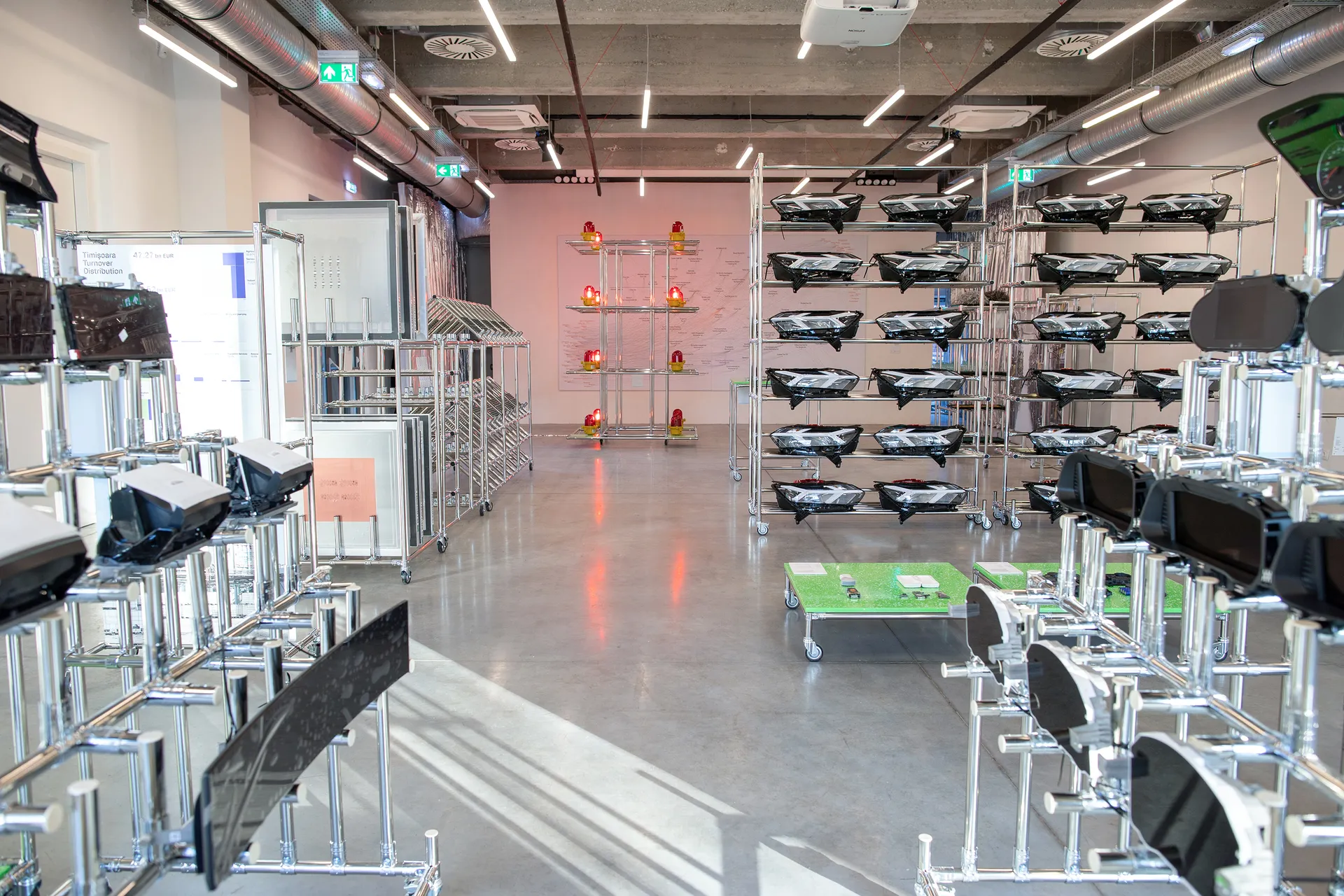
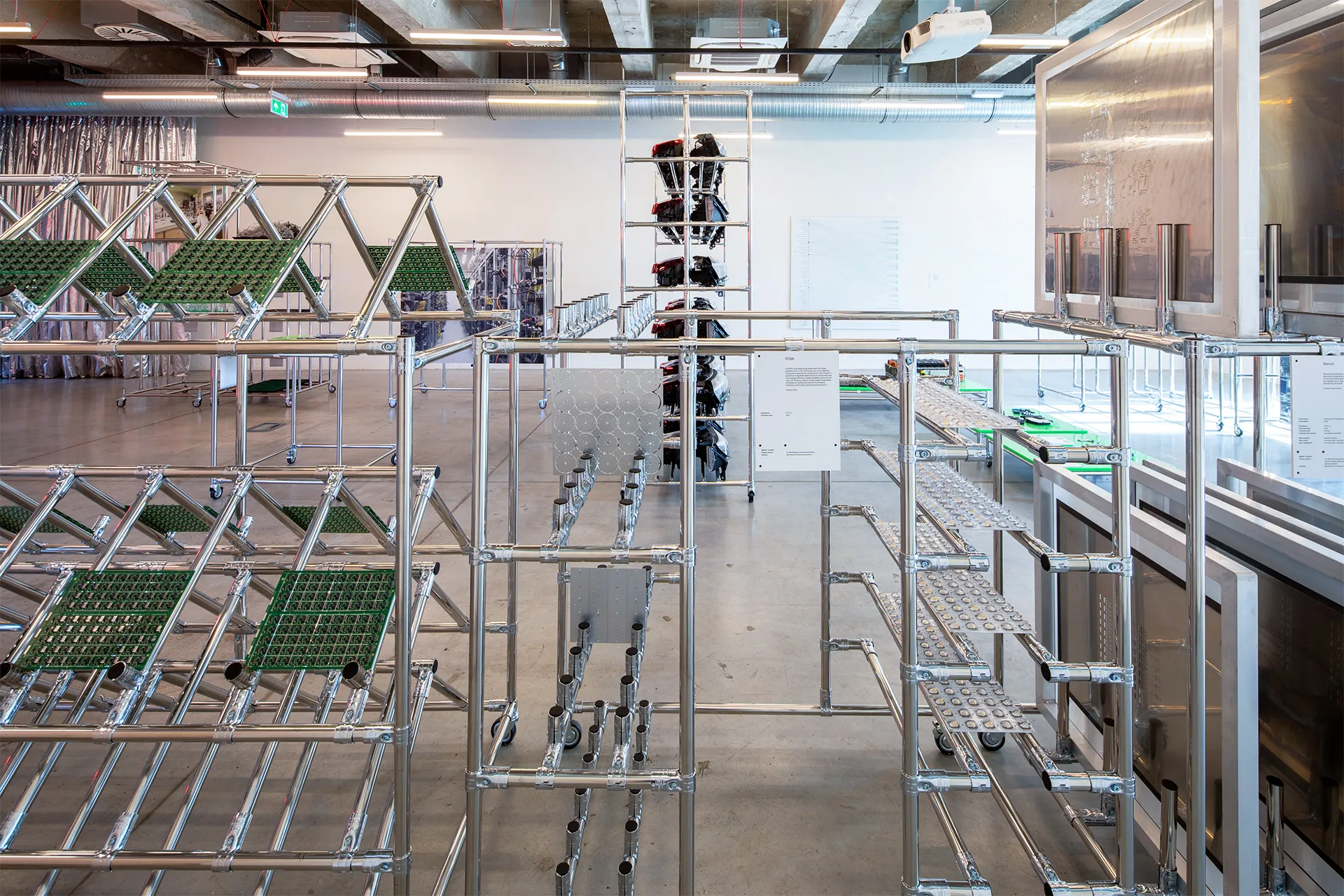
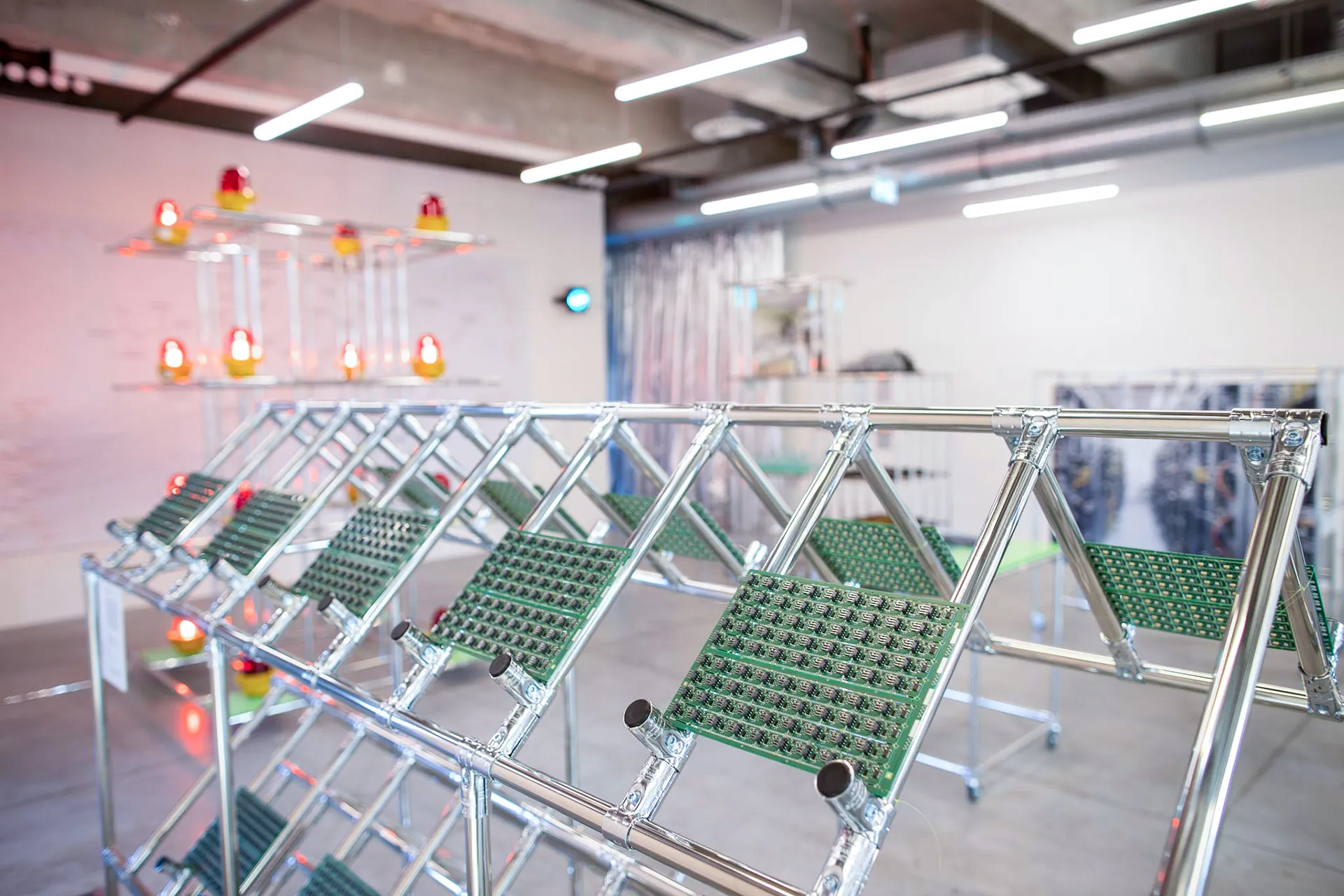
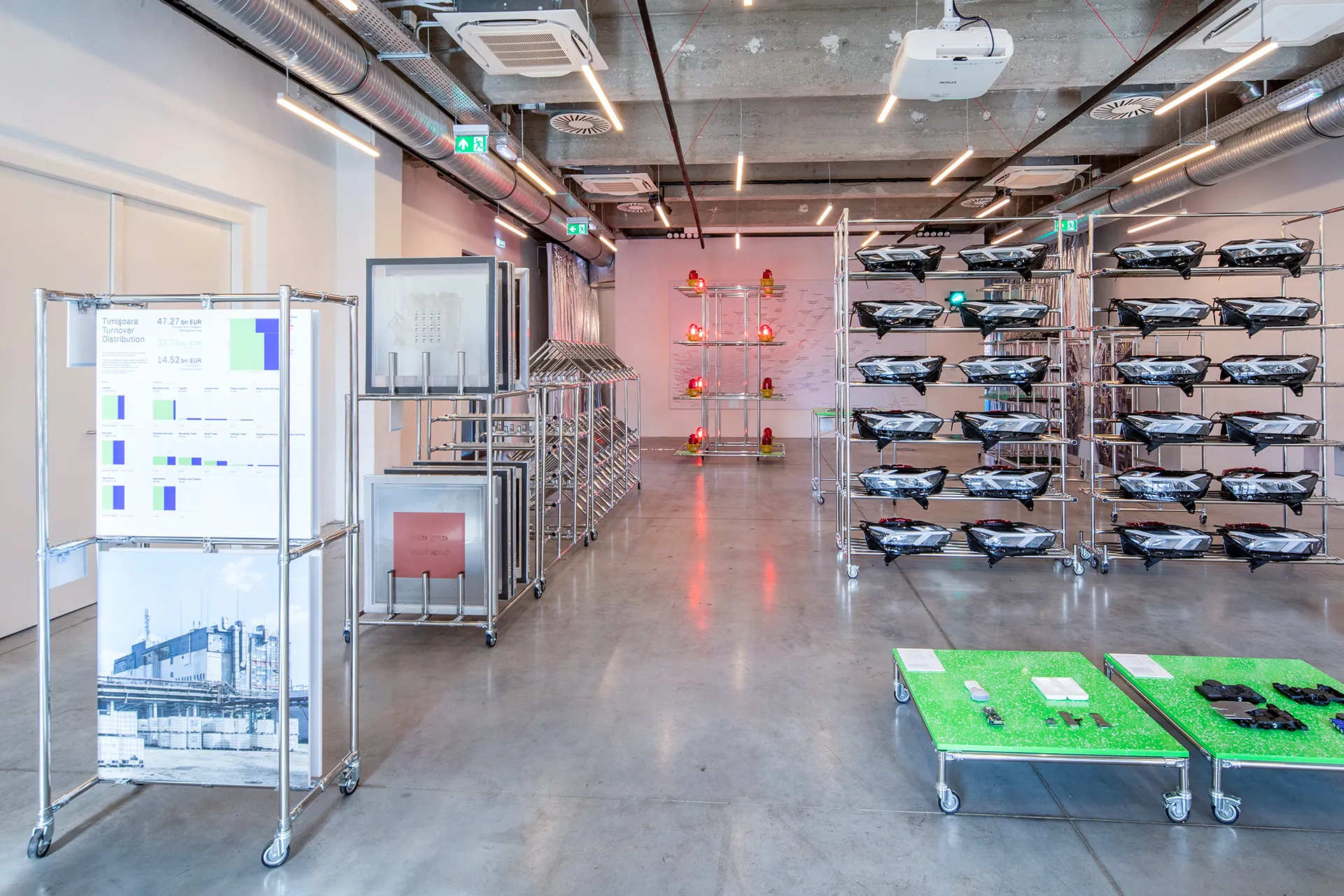
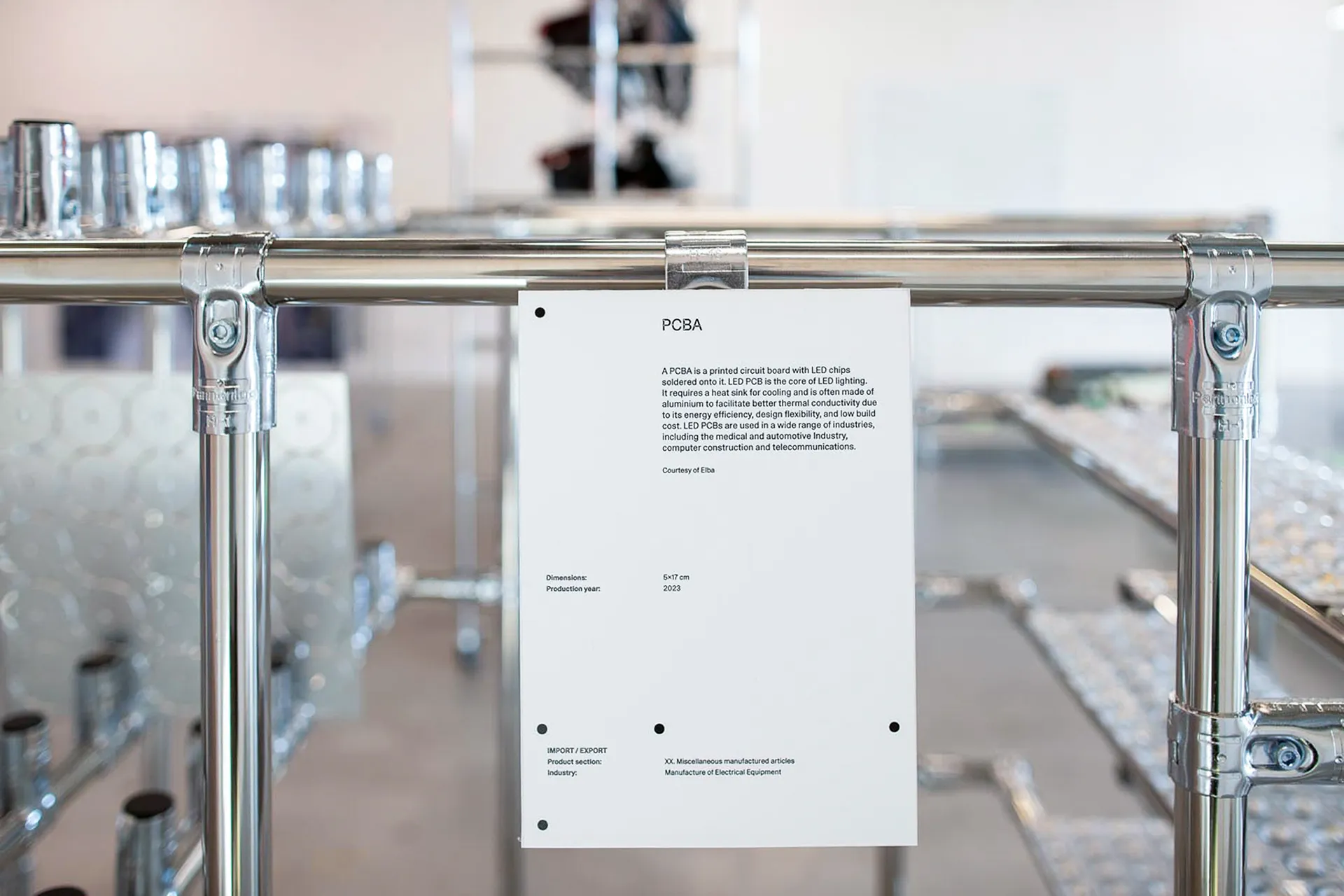
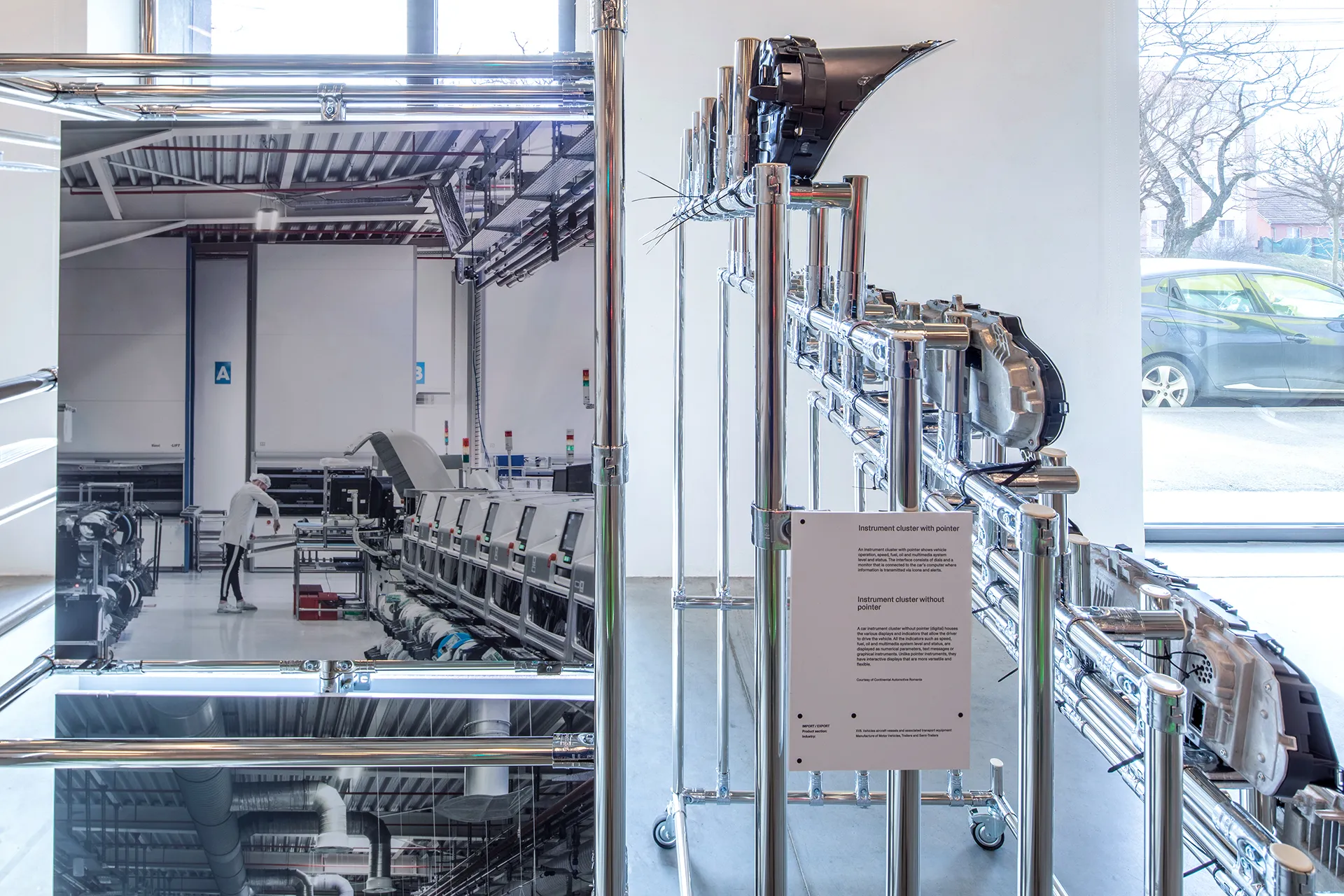
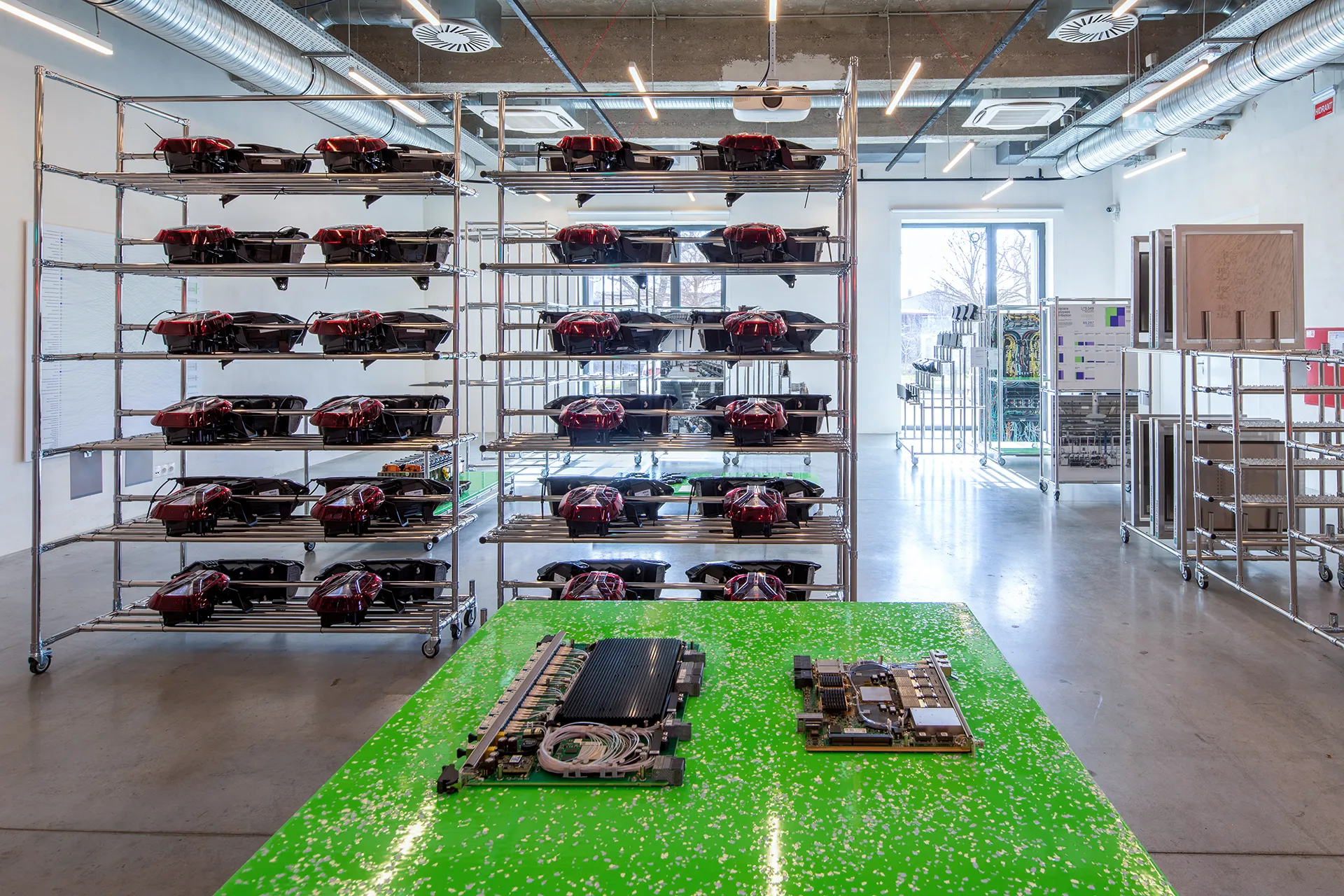
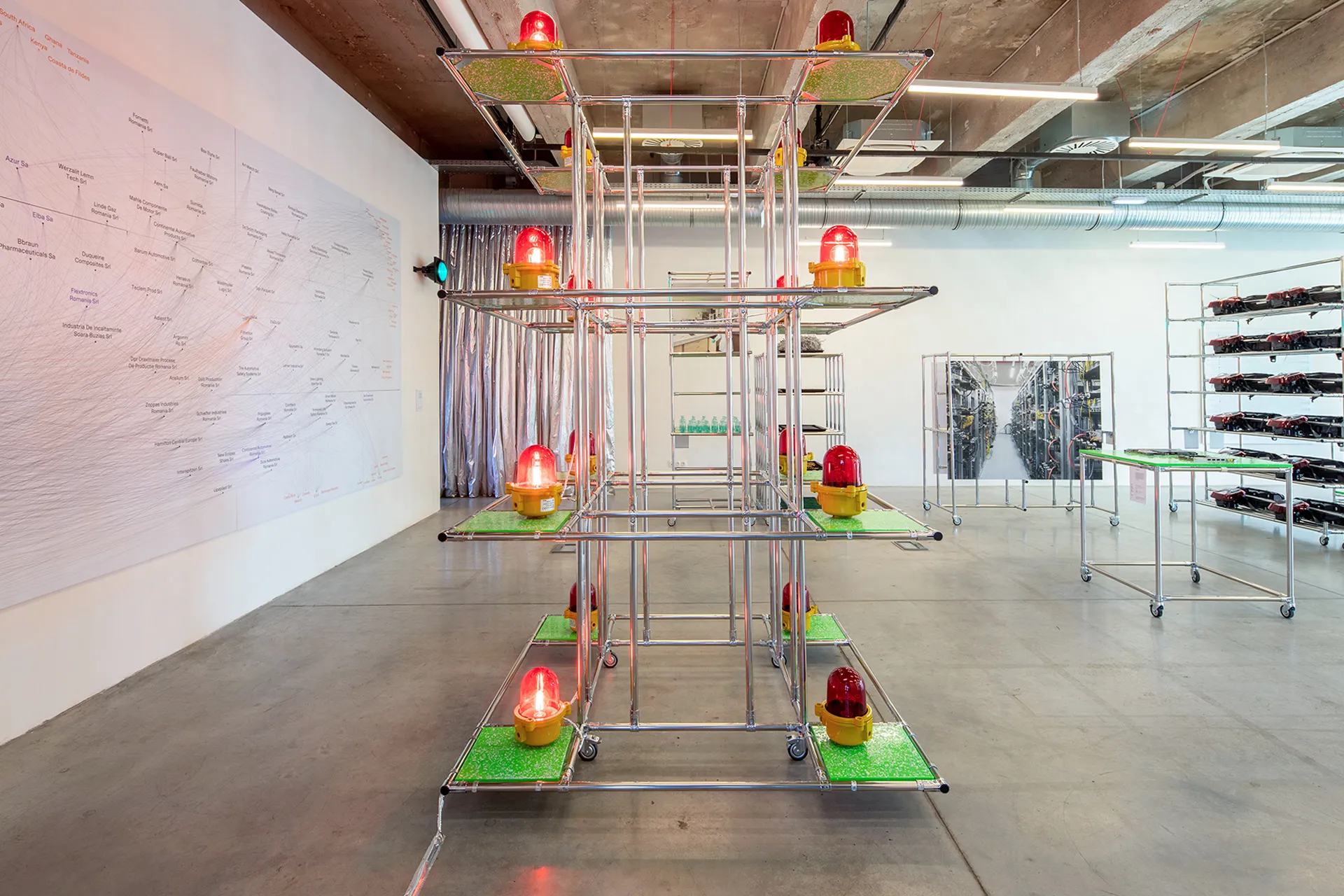
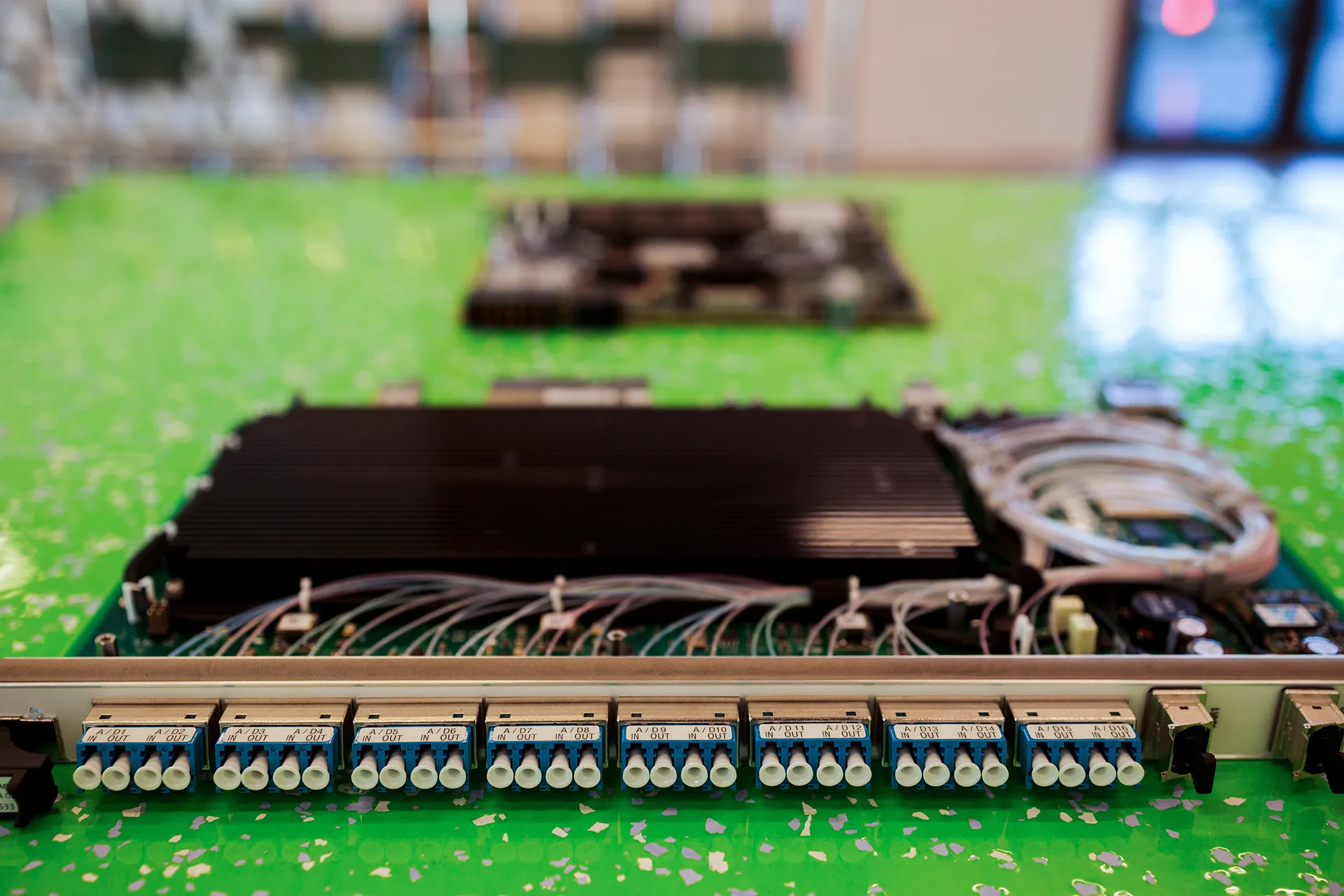
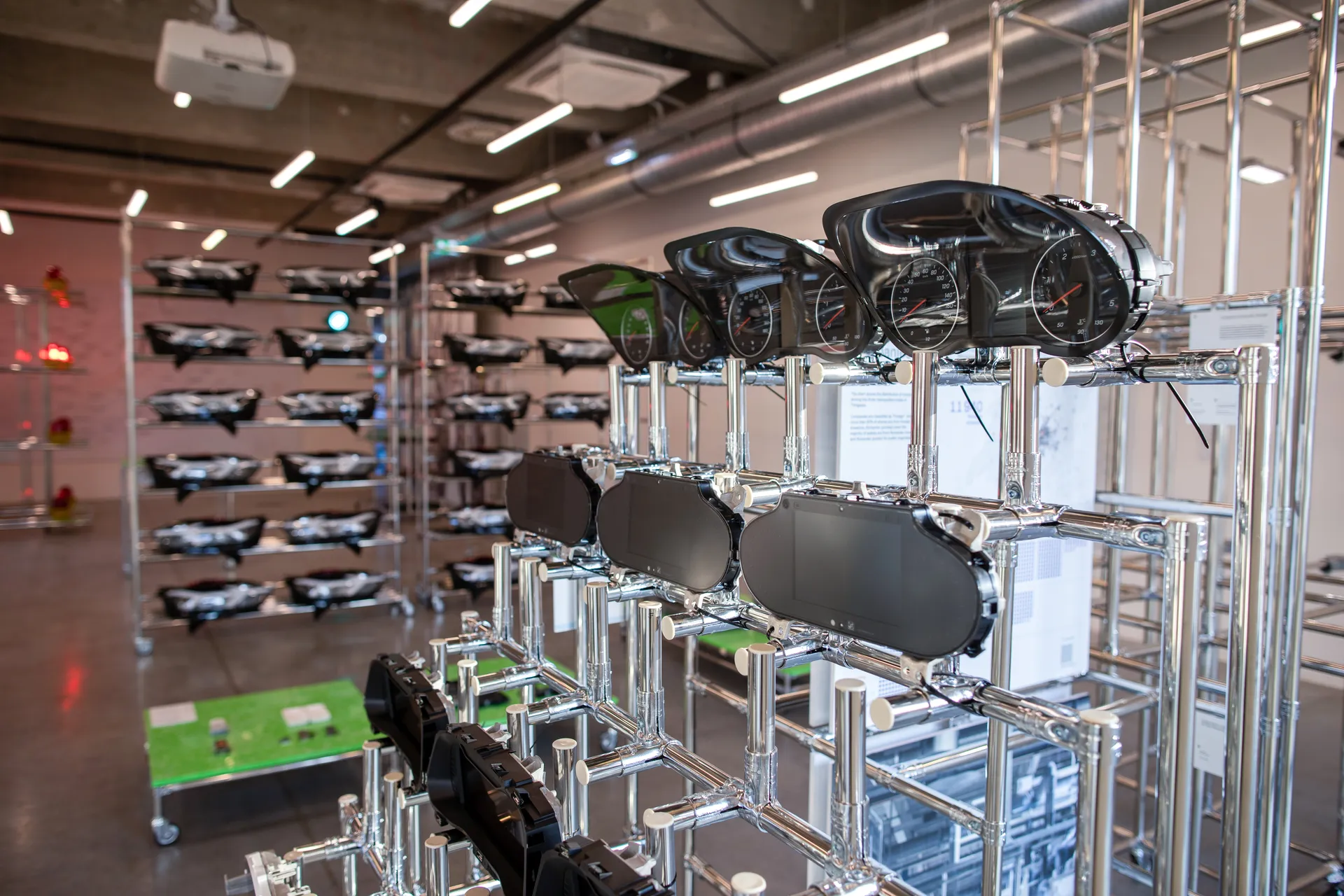
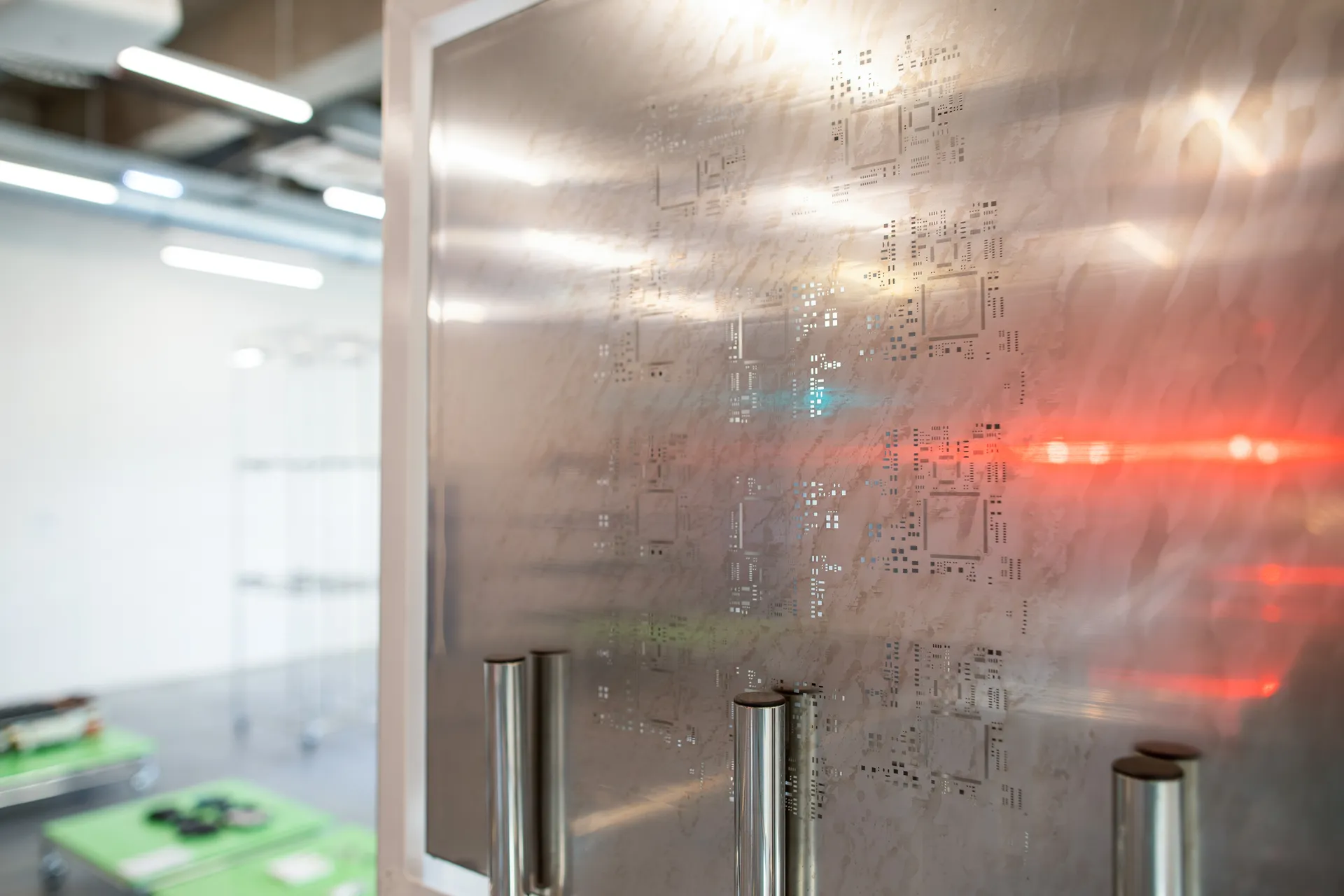
The exhibition space brought together data-driven research, object collections, manufacturing components, resources and photographic documentation. Mundane objects of different function, form and substance, were borrowed from manufacturing companies. Components were extracted from their assembly lines and presented in their temporary state before being hidden inside complex technological objects. Resources and leftover materials were presented in their raw state before their application or transformation phase.
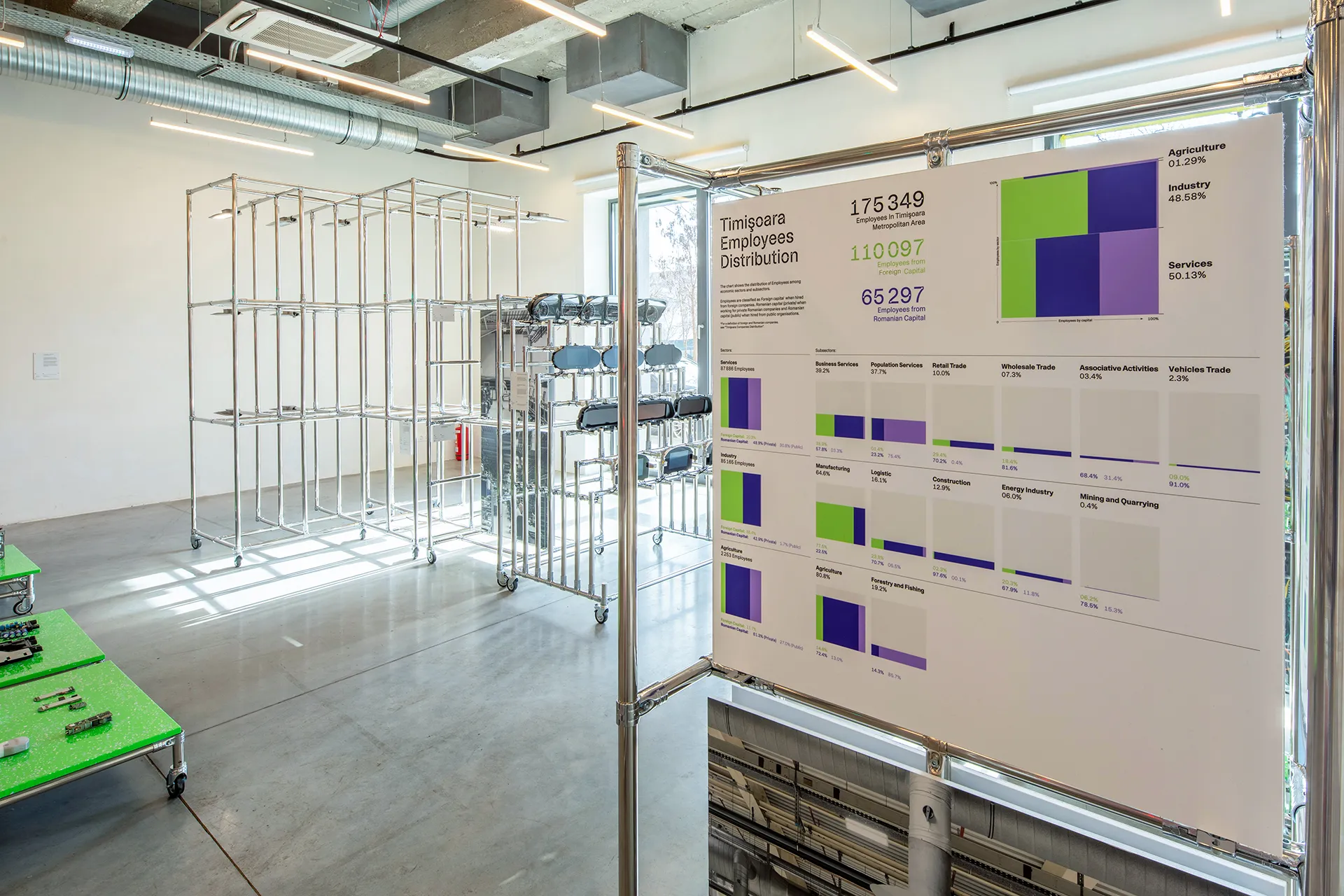
Photographs shared views to inaccessible spaces like factory floors, where workers, machines and various infrastructures are in operation 24/7 behind closed doors. Information graphics contextualised the most relevant assets of the local economy, not only presenting a portrait of the city in relation to its turnover, employees and distribution, but also linking its main companies to the large import-export network that starts, crosses or ends in the metropolitan area of the city.
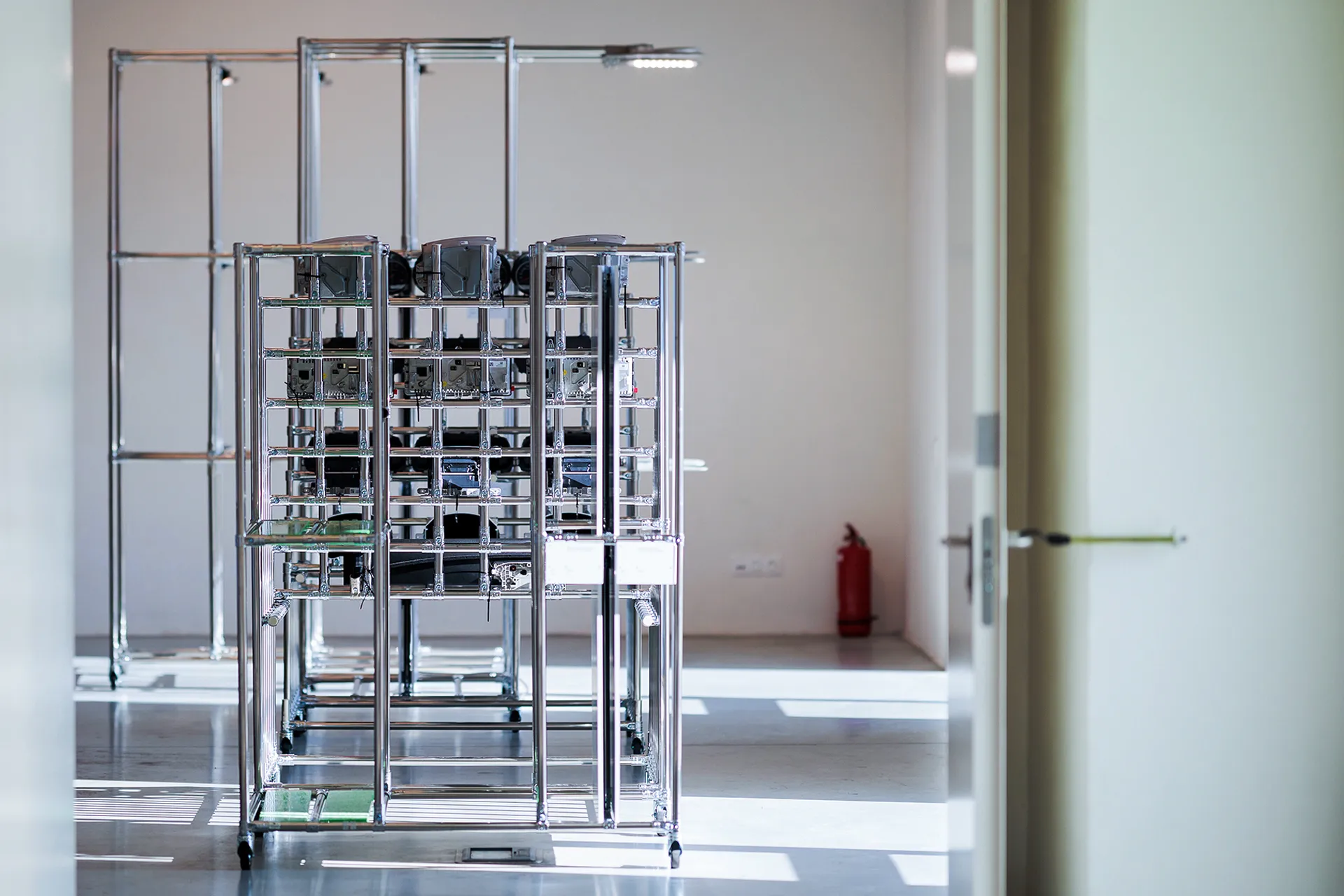
The entire installation was produced within the local industrial hubs of the city. The exhibition set reconsidered the traditional furniture of factory assembly lines to accommodate the material and visual elements of the research. Designed as a modular system mirroring the repetition and standardisation within the global manufacturing industry, this overall composition served as a foundation for contemplating the contemporary interdependence of local and multinational production forces.
As the concept of mirroring in social science is an unconscious behaviour of imitation from one being to another, the exhibition can be read as a reflection board, an inventory and a tangible interconnection of skills, data, places, technologies, and products. As a whole, the exhibition reflects on the state of design in the city and its role as invisible or visible discipline fundamental to the local economy in connection to global supplies or demands.
Curator
Martina Muzi
General coordination team
Oana Simionescu (FABER)
Loredana Gaiță (UPT)
Exhibition production team
Anabella Costache
Bianca Schick
Exhibition assistants
Karola Kalapati
Mihai Moldovan
Cristina Potra Mureșan
PlanZERO
Graphic Design
Federico Santarini
Kirsten Spruit
Research team
Norbert Petrovici (coordination)
Vlad Alexe (data science)
Vlad Bejinariu (history)
Ágota Ábrán (organisational ethnography)
Andrei Herța (organisational ethnography)
Macrina Moldovan (organisational ethnography)
Photo reportage
Marius Vasile
Program team
Cristian Blidariu
Diana Caducenco
Victoria Cociotă
Alexandru Luca
Ionel Mărgineanu
Ema Prisca
Roxana Sîrbu
Florin Unguraș
Mihaela Tilincă
Exhibition documentation
Seba Tataru
Petru Cojocaru
Collaborators from companies
AZUR:
Marc-Andre Fritsche
Alina Perdivară
Adriana Vrâncuț
Veronica Oros
Adrian Nistor
Dräxlmaier
Iulian Antonie
Eugeniu Arabagi
Lucian Bosoi
Alexandru Doran
Oana Panait
Sebastian-Cristian Poelincă
Violeta Robu
Alin Stoi
Nicolae Todea
Elba:
Cristian Mucenicu
Alexandru Sere
Amalia Torok
Flex:
Florin Asavei
Miladi Bobîrsc
Igor Bulavitchi
Costel Calagiu
Dan Calicean
Florin Drăgan
Ovidiu Erina
Alexander Klein
Mirco Miucin
Ovidiu Morariu
Diana Năstase
Sonya Oprișa
Cristina Tath
Sorin Teleptean
Adelin Trandafir
Gelcoprod
Ovidiu Covăsală
Nokia
Florin Costin Ciocan
Andreea Constantin
Continental Automotive Timișoara Team